Foundational Discovery
c. 1290
The invention of spectacles
Spectacles with convex lenses, first made in northern Italy around 1290, let people whose near sight failed in middle age keep reading. Magnifying glasses were ancient, but this was the first use of lenses to correct eyesight. The inventor is unknown.
Key people
- Giordano da Pisa
- Dominican friar whose 1306 sermon said eyeglasses were under twenty years old
- Alessandro della Spina
- Pisan monk later credited, on disputed evidence, with making early spectacles
- Salvino degli Armati
- Florentine named as inventor in 1738 on little evidence
Source
Magnifying and burning glasses were known in antiquity, and a medieval reader with failing sight could push a convex lens of rock crystal or quartz across a manuscript word by word. Mounting a pair of lenses in front of the eyes was something new. Nobody knows who first did it. The evidence points to northern Italy, most probably Pisa, around 1290.
The best evidence is a sermon. On 23 February 1306 the Dominican friar Giordano da Pisa said that the art of making eyeglasses had been found less than twenty years earlier, and that he had seen and talked with the man who first made them. He did not give a name. A manuscript of about 1299, once in the library of the 17th-century scholar Francesco Redi, spoke of spectacles recently invented for old men whose sight had begun to fail, and it is said to be the earliest written reference.
Two men were later named as the inventor, on weak grounds. Redi appears to have altered a document so that it credited the Pisan monk Alessandro della Spina; other readers took it to mean that Spina had seen spectacles made by someone else and then made his own. In 1738 Domenico Manni promoted Salvino degli Armati of Florence, whose restored tomb calls him the inventor of spectacles, but little supports the claim.
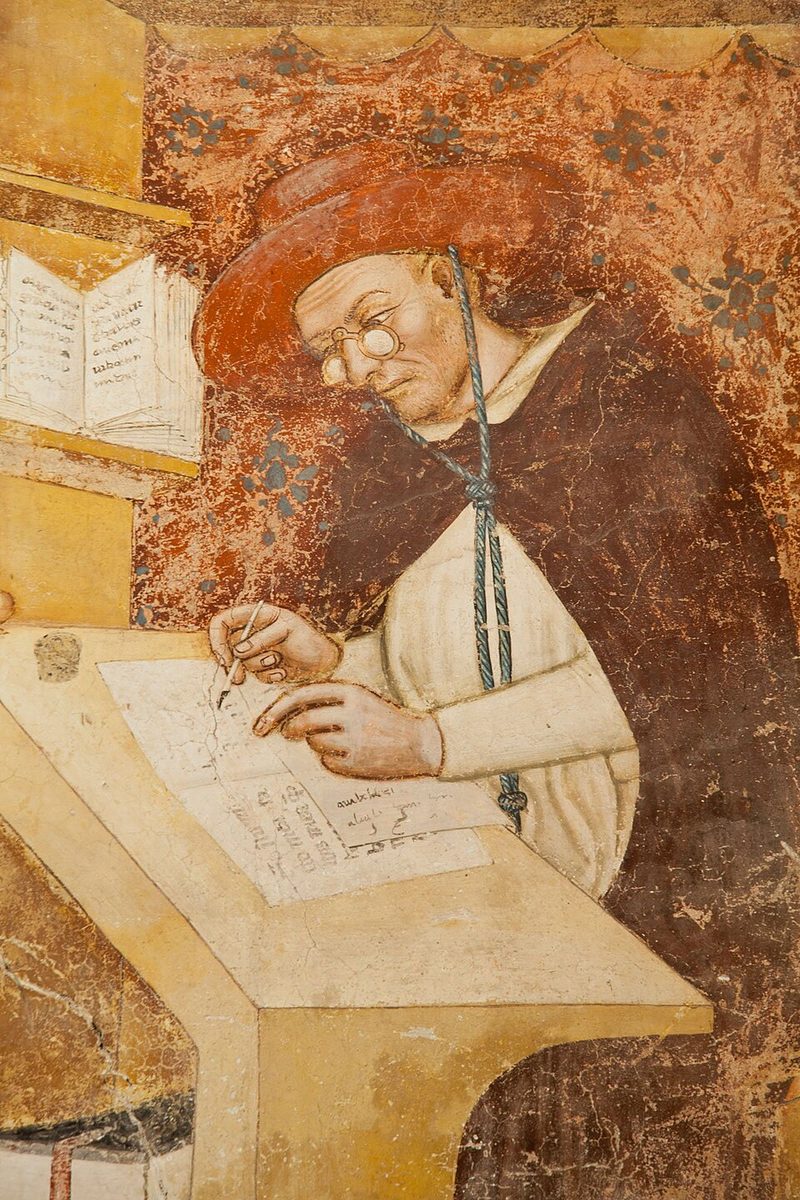
The first spectacles were two lenses in rims riveted together at the handle ends. They had no sides, gripped the nose, and usually had to be steadied by hand. Their convex lenses corrected presbyopia, the long sight of middle age, so they served the few people who lived past their forties and could read. The oldest known picture of them is a fresco of 1352 by Tommaso of Modena showing Cardinal Hugh of Provence in rivet spectacles. By the early 16th century lenses could correct short sight as well. How they worked was explained only later, when Francesco Maurolico of Messina (1494 to 1575) showed how the crystalline lens focuses light on the retina.
Keep exploring
 Read next · same disease or problem
The Sushruta Samhita (c. 100 BCE)
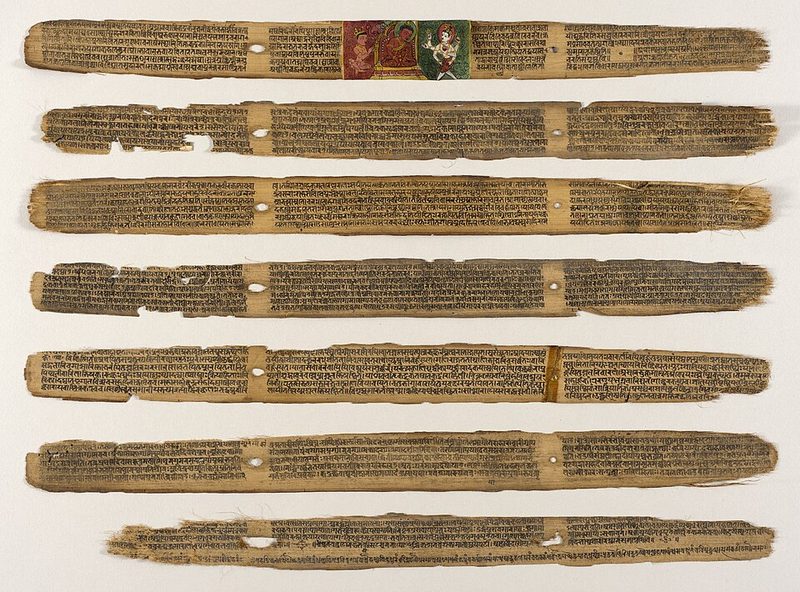
Both answered failing sight, spectacles with convex lenses and the Sushruta Samhita with couching for cataract. The Sushruta story shows an ancient Indian surgical text whose cataract method was known in China by the 7th century.
Read this moment
Read next · same disease or problem
The Sushruta Samhita (c. 100 BCE)
Both answered failing sight, spectacles with convex lenses and the Sushruta Samhita with couching for cataract. The Sushruta story shows an ancient Indian surgical text whose cataract method was known in China by the 7th century.
Read this moment
 Today on The Clinical Times
Love to Dream recalls portable baby sound machine over fire and burn risk
Love to Dream has recalled its portable Sleep Machine because its lithium-ion battery can overheat while charging with an incompatible charger, creating a risk of fire and burns.
Read today’s top stories
Today on The Clinical Times
Love to Dream recalls portable baby sound machine over fire and burn risk
Love to Dream has recalled its portable Sleep Machine because its lithium-ion battery can overheat while charging with an incompatible charger, creating a risk of fire and burns.
Read today’s top stories
All 526 moments in the history of medicine. This one is in chapter 2, The medieval world
Connected moments
How this moment links to others in the history of medicine, and what you will find in each.
-
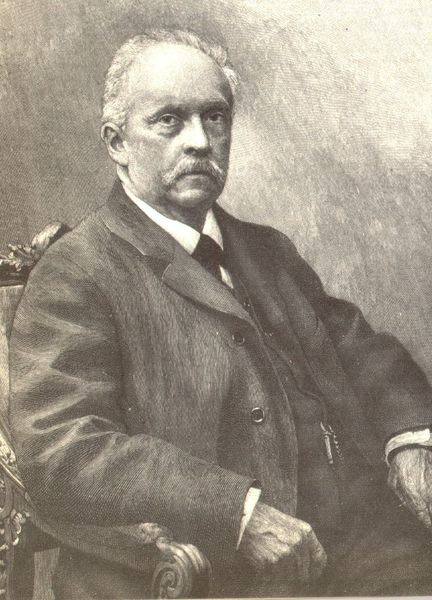 Same disease or problem1851Helmholtz's ophthalmoscopeBoth put optics to work for the eye, lenses to correct sight and a mirror to see inside it. Helmholtz's story shows the first view of the living retina through the pupil, and some 200 models that followed.Read this moment
-
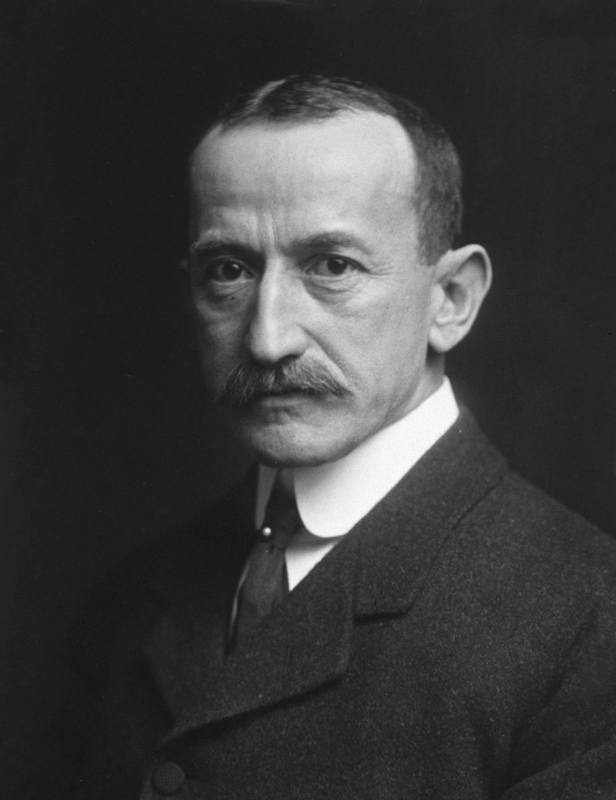 Same disease or problem1884Koller's cocaine local anesthesiaBoth served patients with failing eyes, spectacles by correcting sight and Koller's cocaine drops by making eye operations such as cataract extraction painless. Koller's story shows how the method spread within weeks.Read this moment