Foundational Discovery
1851
Helmholtz's ophthalmoscope
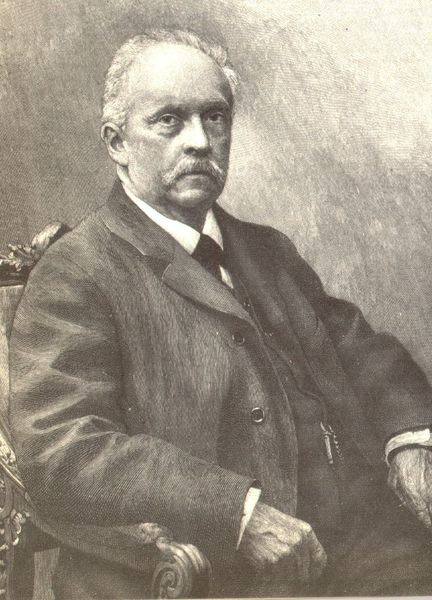
Hermann von Helmholtz's eye mirror, built in 1850 and described in 1851, let an examiner light the inside of the eye and see the living retina through the pupil. Other designs followed within a year, and some 200 models existed by 1913.
Key people
- Hermann von Helmholtz
- Physiologist who built the eye mirror and described it in 1851
- Theodor Ruete
- Built the first instrument for indirect ophthalmoscopy, 1852
- Charles Babbage
- Inventor whose 1847 eye instrument failed to give an image
Source
The pupil looks black, and for centuries no one could see what lay behind it. In 1810 Bénédict Prévost explained that the eye glows only when light enters it from outside. Jan Purkinje saw the back of a dog's eye, and then a human eye, by reflecting candlelight from his spectacles, but his 1825 account in Latin went unnoticed. Charles Babbage built an instrument in 1847, but it gave no image when he showed it to the ophthalmologist Thomas Wharton Jones, and he gave up.
Hermann von Helmholtz, a 29-year-old professor of physiology, wanted to show his students why the pupil sometimes looked black and sometimes glowed. The American Academy of Ophthalmology's museum dates his instrument to 6 December 1850 and says he made it from cardboard, glue and microscope glass while preparing a demonstration of the conservation of energy. He described it in 1851 and called it an Augenspiegel, or eye mirror; the name ophthalmoscope came into common use in 1854.
Helmholtz set out what such an instrument needs: a light source, a way to send the light into the eye along the observer's line of sight, and optics to sharpen the blurred image of the fundus. His answer was a stack of thin glass cover plates set at an angle. They reflected the light of a candle into the patient's eye while the observer looked through them at the retina, and he tried different numbers of plates, noting that three or more partly polarized the light.
Others soon changed the design. Theodor Ruete of Leipzig built the first instrument for indirect ophthalmoscopy in 1852, and mirrors with a hole in the center replaced the glass plates. By the time Helmholtz died in 1894 a great many models existed; an exhibition for the instrument's 50th anniversary showed 140 designs, and in 1913 Edward Landolt counted 200.
Keep exploring
 Read next · same disease or problem
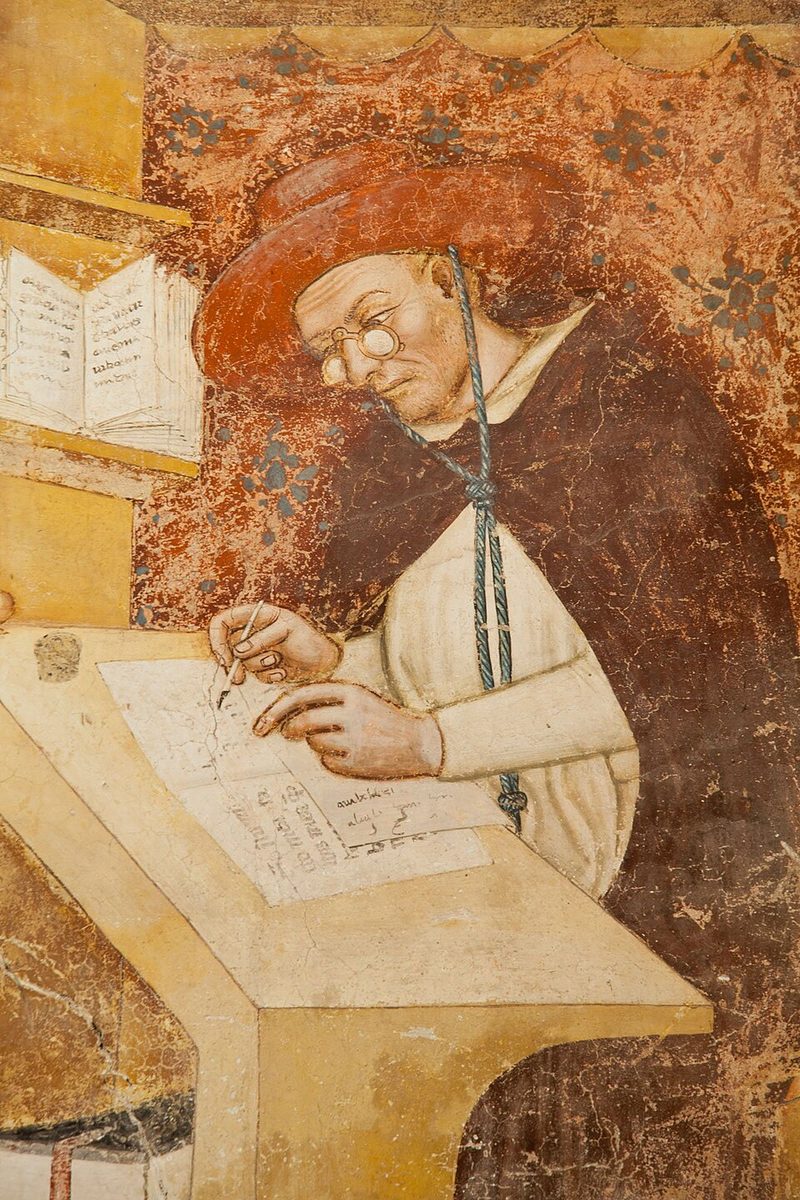
The invention of spectacles (c. 1290)
Both put optics to work for the eye, spectacles to correct failing sight and Helmholtz's mirror to see inside it. The spectacles story shows convex lenses first mounted before the eyes in Italy around 1290.
Read this moment
Read next · same disease or problem
The invention of spectacles (c. 1290)
Both put optics to work for the eye, spectacles to correct failing sight and Helmholtz's mirror to see inside it. The spectacles story shows convex lenses first mounted before the eyes in Italy around 1290.
Read this moment
 Today on The Clinical Times
Love to Dream recalls portable baby sound machine over fire and burn risk
Love to Dream has recalled its portable Sleep Machine because its lithium-ion battery can overheat while charging with an incompatible charger, creating a risk of fire and burns.
Read today’s top stories
Today on The Clinical Times
Love to Dream recalls portable baby sound machine over fire and burn risk
Love to Dream has recalled its portable Sleep Machine because its lithium-ion battery can overheat while charging with an incompatible charger, creating a risk of fire and burns.
Read today’s top stories
All 526 moments in the history of medicine. This one is in chapter 4, Germs, numbers and clean water
Connected moments
How this moment links to others in the history of medicine, and what you will find in each.
-
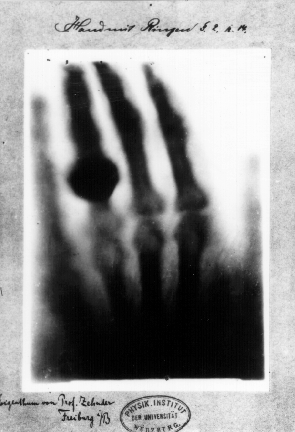 Same disease or problem1895Roentgen's discovery of X-raysHelmholtz let doctors look inside the living eye, and Roentgen let them see inside the living body. His story shows the radiation that passed through soft tissue but not bone.Read this moment
-
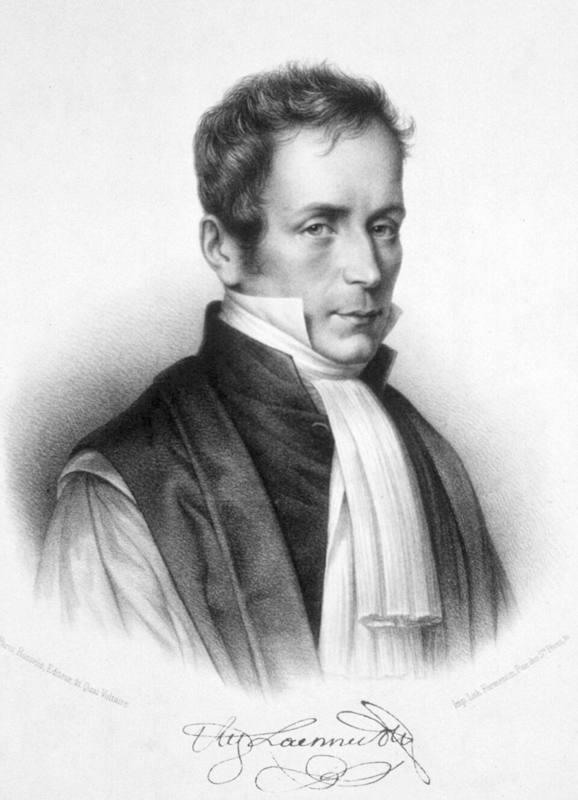 Same disease or problem1816Laennec's stethoscopeBoth gave physicians a simple instrument to examine a hidden part of the body, the stethoscope for the chest and the eye mirror for the retina. Laennec's story shows the rolled paper tube that became the stethoscope.Read this moment