Cardiology
1980
Furchgott and nitric oxide in blood vessels
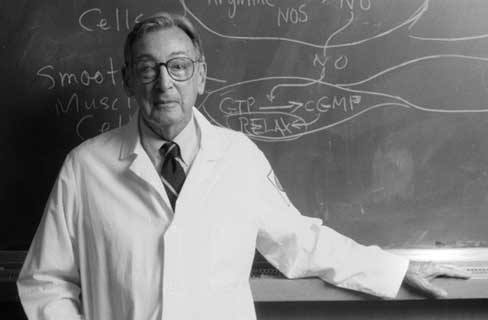
In 1980 Robert Furchgott showed that acetylcholine relaxes arteries only when their lining of endothelial cells is intact, because those cells release a relaxing substance. In 1986 that substance was identified as nitric oxide, the first gas known to carry signals between cells.
Key people
- Robert F. Furchgott
- Brooklyn pharmacologist who discovered EDRF; Nobel laureate 1998
- Louis J. Ignarro
- Los Angeles pharmacologist who identified EDRF as nitric oxide
- Ferid Murad
- Showed in 1977 that nitroglycerin releases nitric oxide
Source
Acetylcholine widens blood vessels powerfully in the living body, yet in isolated helical strips of rabbit aorta the only response anyone had reported was contraction. Robert Furchgott, head of pharmacology at the State University of New York medical school in Brooklyn, had used rabbit aortic strips in his research for years.
In May 1978, in the first experiment of a new study of receptors in rabbit aorta, a technician's error gave a preparation in which acetylcholine and carbachol relaxed the muscle instead of contracting it. Furchgott and J. V. Zawadzki traced the difference. Rings of aorta relaxed; strips did not, because while being cut the inner surface of the strips had been rubbed against other surfaces. When rubbing was avoided, rings and strips of every shape relaxed. Rubbing, they suspected, stripped away the endothelium, the single layer of cells lining the vessel.
Their 1980 paper in Nature showed that acetylcholine relaxed rabbit aorta and other vessels only when endothelial cells were present. The drug acted on muscarinic receptors of those cells, which released something that relaxed the smooth muscle beneath. In a so-called sandwich experiment, a piece of aorta without endothelium, which contracted on stimulation, was laid against a piece with endothelium that could neither contract nor relax. Stimulated together, the bare piece relaxed. Furchgott called the unknown messenger endothelium-derived relaxing factor, or EDRF.
Ferid Murad had already shown in 1977 that nitroglycerin and related drugs release nitric oxide, which activates guanylyl cyclase, raises cyclic GMP and relaxes smooth muscle. In 1986 Louis Ignarro and Furchgott, working independently, concluded that EDRF was nitric oxide, and they presented the finding at a conference that July. Nitric oxide was the first gas found to act as a signaling molecule in the body. In atherosclerosis the endothelium makes less of it, and knowledge of its role in erection led to new drugs for impotence.
Furchgott, Ignarro and Murad shared the 1998 Nobel Prize in Physiology or Medicine. Furchgott died on 19 May 2009.
Keep exploring
 Read next · led to
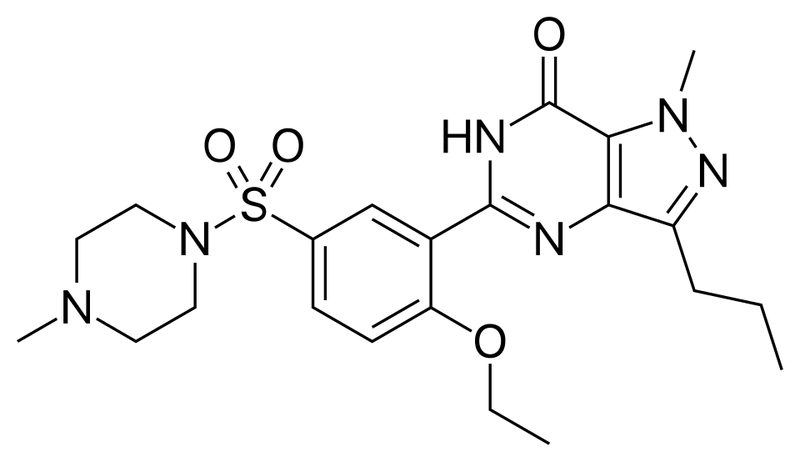
Sildenafil for erectile dysfunction (1998)
Knowing nitric oxide's role in erection led to new drugs for impotence. The sildenafil entry shows an angina drug that boosts the nitric oxide signal becoming the first oral pill for impotence.
Read this moment
Read next · led to
Sildenafil for erectile dysfunction (1998)
Knowing nitric oxide's role in erection led to new drugs for impotence. The sildenafil entry shows an angina drug that boosts the nitric oxide signal becoming the first oral pill for impotence.
Read this moment
 Today on The Clinical Times
Love to Dream recalls portable baby sound machine over fire and burn risk
Love to Dream has recalled its portable Sleep Machine because its lithium-ion battery can overheat while charging with an incompatible charger, creating a risk of fire and burns.
Read today’s top stories
Today on The Clinical Times
Love to Dream recalls portable baby sound machine over fire and burn risk
Love to Dream has recalled its portable Sleep Machine because its lithium-ion battery can overheat while charging with an incompatible charger, creating a risk of fire and burns.
Read today’s top stories
All 526 moments in the history of medicine. This one is in chapter 6, Trials, scanners and rights
Connected moments
How this moment links to others in the history of medicine, and what you will find in each.
-
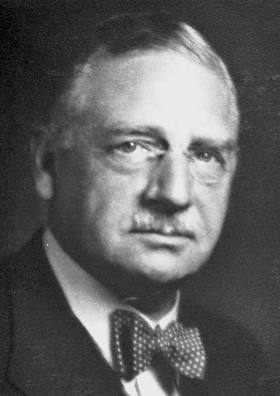 Same disease or problem1921Loewi and chemical nerve transmissionBoth showed that tissues signal with chemicals, and acetylcholine appears in both stories. Loewi's entry shows two frog hearts proving that nerves act by releasing a substance.Read this moment
-
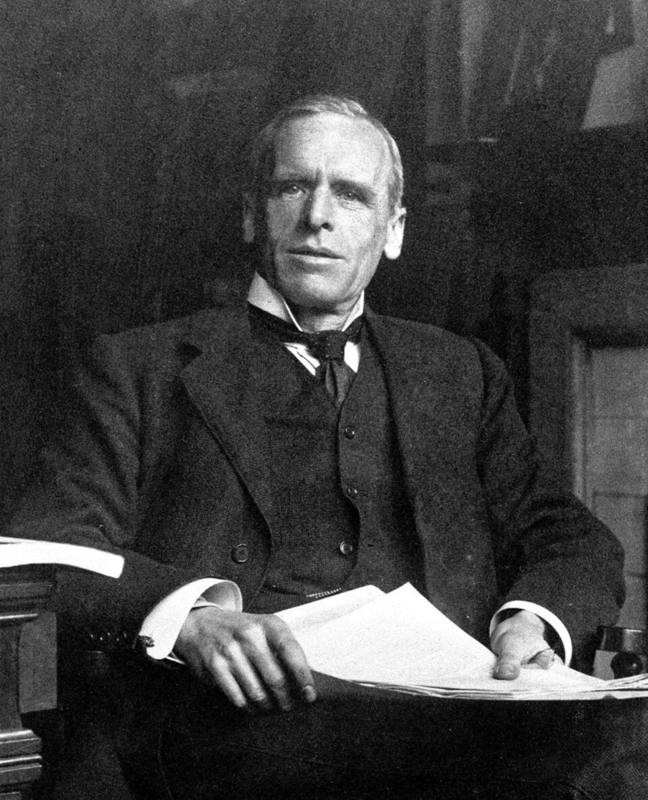 Same disease or problem1902Bayliss and Starling's discovery of secretinBoth found an unknown messenger by showing that one tissue releases something that acts on another. The secretin entry shows the 1902 experiment behind the first hormone.Read this moment