Patients & Rights
1990
Cruzan and the Patient Self-Determination Act
In 1990 the Supreme Court held that Missouri could require clear and convincing evidence of an incompetent patient's wishes before withdrawing life support. Months later Congress required hospitals and other providers to tell adult patients of their rights to refuse treatment and make advance directives.
Key people
- Nancy Cruzan
- Missouri woman in a persistent vegetative state after a 1983 crash
- Lester L. Cruzan
- Her father and co-guardian, a petitioner before the Supreme Court
- John Danforth
- Missouri senator who sponsored the Patient Self-Determination Act
Source
On the night of 11 January 1983, Nancy Cruzan lost control of her car on Elm Road in Jasper County, Missouri. The car overturned, and she was found face down in a ditch with no detectable breathing or heartbeat. Paramedics restored both, but she was left in a persistent vegetative state in a Missouri state hospital, where the state bore the cost of her care. Her parents asked that her artificial nutrition and hydration be stopped. Hospital employees refused to do so without court approval.
A state trial court authorized the withdrawal, relying in part on her remark to a former housemate that she would not want to live unless she could live at least halfway normally. The Missouri Supreme Court reversed. Without the formalities of the state's living will law, or clear and convincing evidence of the patient's own wishes, it held, no one could make that choice for an incompetent person, and it found the housemate's account unreliable.
The US Supreme Court affirmed on 25 June 1990 by five votes to four. Writing for the majority, Chief Justice Rehnquist assumed, for this case, that a competent person has a constitutionally protected right to refuse lifesaving hydration and nutrition, and held that the Constitution does not forbid a state to demand clear and convincing evidence of an incompetent patient's wishes. Justice O'Connor, concurring, wrote that the ruling did not rule out a later finding that states must carry out the decisions of a patient's duly appointed surrogate. Justices Brennan, Marshall, Blackmun and Stevens dissented. Back in state court, the family offered more evidence of Nancy Cruzan's wishes, and the probate judge ruled that the feeding tube could be removed.
Few states demanded proof that strict; most used the ordinary civil standard, the preponderance of the evidence. A 2019 review by A. M. Capron links the Cruzans' long fight to a surge of interest in advance directives. On 5 November 1990 Congress enacted the Patient Self-Determination Act, sponsored by Senator John Danforth of Missouri. From December 1991 most hospitals, nursing homes, home health agencies and health plans had to give adult patients written information on their rights under state law to accept or refuse treatment and to make advance directives, note in the medical record whether a patient had one, and not make care depend on it.
Keep exploring
 Read next · same disease or problem
California's Natural Death Act (1976)
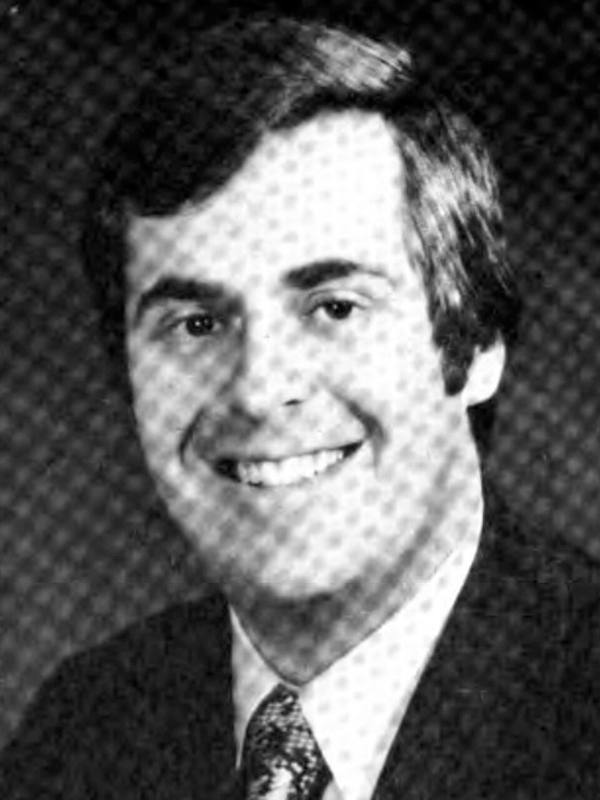
Missouri's court demanded the formalities of a living will law, the kind California first enacted in 1976. The California entry shows the first law giving legal force to a written instruction to withhold life support.
Read this moment
Read next · same disease or problem
California's Natural Death Act (1976)
Missouri's court demanded the formalities of a living will law, the kind California first enacted in 1976. The California entry shows the first law giving legal force to a written instruction to withhold life support.
Read this moment
 Today on The Clinical Times
Love to Dream recalls portable baby sound machine over fire and burn risk
Love to Dream has recalled its portable Sleep Machine because its lithium-ion battery can overheat while charging with an incompatible charger, creating a risk of fire and burns.
Read today’s top stories
Today on The Clinical Times
Love to Dream recalls portable baby sound machine over fire and burn risk
Love to Dream has recalled its portable Sleep Machine because its lithium-ion battery can overheat while charging with an incompatible charger, creating a risk of fire and burns.
Read today’s top stories
All 526 moments in the history of medicine. This one is in chapter 6, Trials, scanners and rights