Public Health
2015
WHO Global Action Plan on Antimicrobial Resistance
In May 2015 the World Health Assembly adopted a plan for curbing antimicrobial resistance through surveillance, hygiene, better antibiotic use in people and animals, and new drugs. A 2022 study attributed 1.27 million deaths in 2019 directly to resistant bacteria.
Key people
- Christopher J. L. Murray
- Lead author of the 2022 global estimate of deaths from bacterial resistance
Source
The World Health Assembly adopted the Global Action Plan on Antimicrobial Resistance in May 2015 as resolution WHA68.7. In presenting the 45-page plan, WHO warned that misuse and overuse of antimicrobial medicines had put every nation at risk and that, without harmonized and immediate global action, the world was heading towards a post-antibiotic era in which common infections could once again kill. The plan itself provided the framework for countries' own national action plans.
It set five objectives. Countries were to raise awareness and understanding of resistance through communication, education and training, and to strengthen knowledge through surveillance and research. They were to reduce the incidence of infection through better sanitation and hygiene. They were to optimize the use of antimicrobial medicines in both human and animal health. And they were to build the economic case for sustained investment in new medicines, diagnostic tools and vaccines.
The toll was measured seven years later. In The Lancet on 19 January 2022, Christopher Murray and colleagues estimated that 1.27 million deaths in 2019 were directly attributable to bacterial antimicrobial resistance, meaning they would not have happened had the infections been susceptible to drugs. A further measure counted 4.95 million deaths associated with resistant infections. By the first measure, resistance killed more people that year than HIV or malaria.
A 2024 follow-up study, cited by WHO, estimated that bacterial resistance was associated with more than 4.7 million deaths in 2021. Also in 2024, the UN General Assembly set a target of a 10 percent reduction in deaths associated with bacterial resistance by 2030, and in May 2026 the World Health Assembly adopted an updated Global Action Plan covering 2026 to 2036.
Keep exploring
 Read next · same disease or problem
Gepotidacin (Blujepa), first new oral antibiotic class in decades (2025)
The plan called for investment in new medicines, and gepotidacin became the first new oral antibiotic class in decades. Its entry shows approval for urinary tract infection and gonorrhea.
Read this moment
Read next · same disease or problem
Gepotidacin (Blujepa), first new oral antibiotic class in decades (2025)
The plan called for investment in new medicines, and gepotidacin became the first new oral antibiotic class in decades. Its entry shows approval for urinary tract infection and gonorrhea.
Read this moment
 Today on The Clinical Times
Love to Dream recalls portable baby sound machine over fire and burn risk
Love to Dream has recalled its portable Sleep Machine because its lithium-ion battery can overheat while charging with an incompatible charger, creating a risk of fire and burns.
Read today’s top stories
Today on The Clinical Times
Love to Dream recalls portable baby sound machine over fire and burn risk
Love to Dream has recalled its portable Sleep Machine because its lithium-ion battery can overheat while charging with an incompatible charger, creating a risk of fire and burns.
Read today’s top stories
All 526 moments in the history of medicine. This one is in chapter 7, Genes and pandemics
Connected moments
How this moment links to others in the history of medicine, and what you will find in each.
-
 Same disease or problem1955The Global Malaria Eradication ProgrammeDrug and insecticide resistance defeated the malaria eradication campaign, and the 2015 plan aimed to keep resistance from undoing antibiotics. The 1955 entry shows WHO falling back to control in 1969.Read this moment
-
 Same person1993Global Burden of Disease study and the DALYChristopher Murray, who led the first Global Burden of Disease study, later estimated deaths caused by resistant bacteria. The 1993 entry shows how the DALY measured disease across the world.Read this moment
-
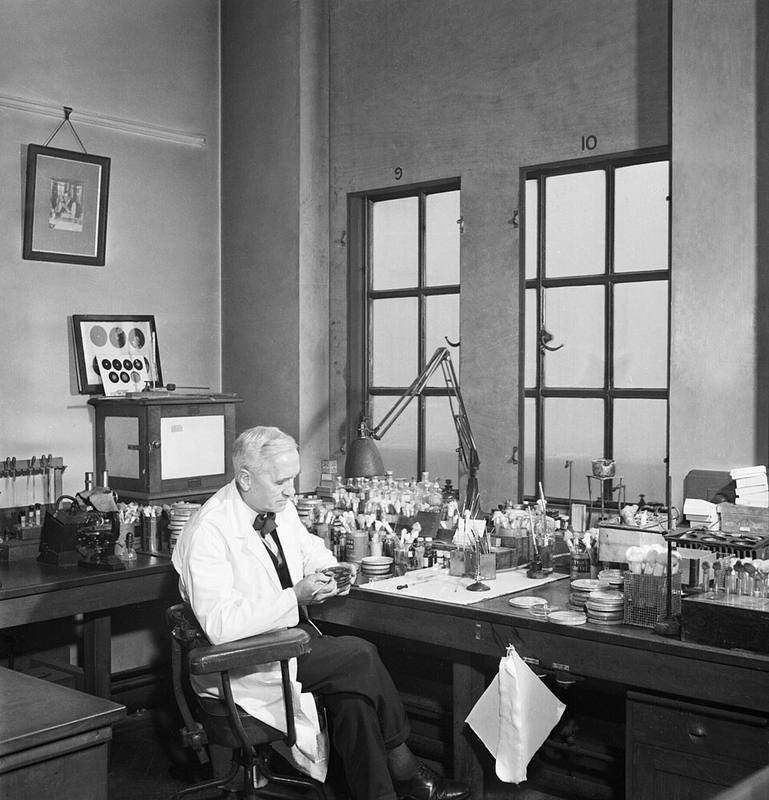 Same disease or problem1928Fleming's discovery of penicillinThe plan warned of a post-antibiotic era, a threat to the age of antibiotics that penicillin began. Fleming's entry shows the mold plate that led to the first antibiotic.Read this moment