Foundational Discovery
2021
AlphaFold protein structure prediction
AlphaFold, an AI model from DeepMind shown in 2020 and published in 2021, predicted many protein structures with accuracy competitive with experiments and has been used to model virtually all 200 million known proteins. Its developers shared the 2024 Nobel Prize in Chemistry.

Key people
- John Jumper
- Google DeepMind scientist; first author of the 2021 AlphaFold paper; Nobel laureate
- Demis Hassabis
- Google DeepMind; senior author of the 2021 paper; Nobel laureate
Source
A protein's job depends on its shape. Proteins are chains built mostly from 20 kinds of amino acids that fold into three-dimensional structures, and since the 1970s researchers had tried to predict those structures from the amino acid sequence alone, a notoriously difficult task. The Royal Swedish Academy of Sciences later called it a 50-year-old problem.
In 2020 Demis Hassabis and John Jumper of DeepMind in London presented AlphaFold2, a deep-learning system that built physical and biological knowledge about protein structure into its design. In the 14th Critical Assessment of protein Structure Prediction, CASP14, it produced structures with accuracy competitive with experimental structures in a majority of cases and greatly outperformed other methods. Jumper, Richard Evans and 32 co-authors, with Hassabis as senior author, described the method in Nature, published online on 15 July 2021, as the first computational method that could regularly predict protein structures with atomic accuracy even when no similar structure was known. Earlier methods, they wrote, fell far short of atomic accuracy, especially when no related structure was available.
The model was then used to predict the structure of virtually all of the 200 million proteins researchers have identified. By 2024 more than two million people in 190 countries had used AlphaFold2, for work that included studying antibiotic resistance and imaging enzymes able to break down plastic.
On 9 October 2024 the Royal Swedish Academy of Sciences awarded half of the Nobel Prize in Chemistry jointly to Hassabis and Jumper for protein structure prediction. The other half went to David Baker of the University of Washington for computational protein design.
Keep exploring
 Read next · same disease or problem
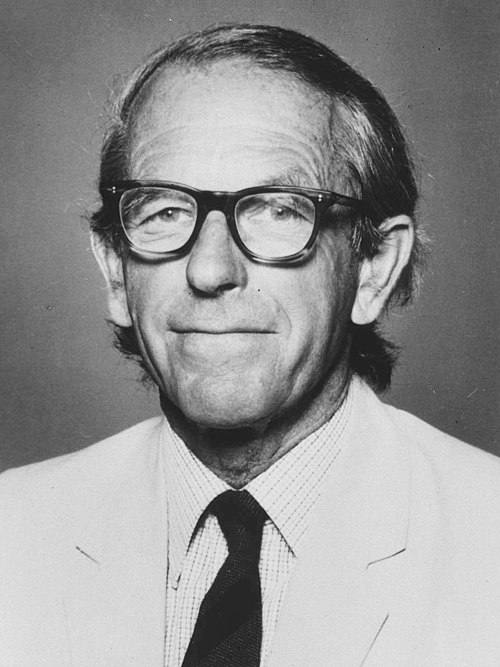
Sanger's Sequencing of Insulin (1955)
Sanger showed a protein has one defined sequence of amino acids, and AlphaFold predicted the shape that sequence folds into. The insulin entry shows the first full sequence of any protein.
Read this moment
Read next · same disease or problem
Sanger's Sequencing of Insulin (1955)
Sanger showed a protein has one defined sequence of amino acids, and AlphaFold predicted the shape that sequence folds into. The insulin entry shows the first full sequence of any protein.
Read this moment
 Today on The Clinical Times
Love to Dream recalls portable baby sound machine over fire and burn risk
Love to Dream has recalled its portable Sleep Machine because its lithium-ion battery can overheat while charging with an incompatible charger, creating a risk of fire and burns.
Read today’s top stories
Today on The Clinical Times
Love to Dream recalls portable baby sound machine over fire and burn risk
Love to Dream has recalled its portable Sleep Machine because its lithium-ion battery can overheat while charging with an incompatible charger, creating a risk of fire and burns.
Read today’s top stories
All 526 moments in the history of medicine. This one is in chapter 7, Genes and pandemics
Connected moments
How this moment links to others in the history of medicine, and what you will find in each.
-
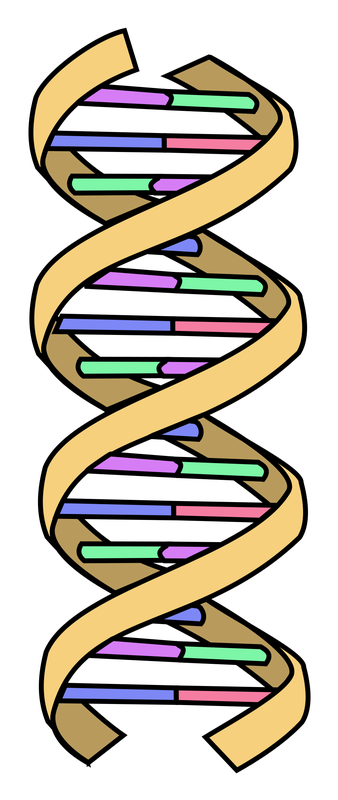 Same disease or problem1953Molecular Structure of Nucleic Acids: The DNA Double HelixBoth showed that a biological molecule's shape explains what it does, DNA's double helix and the folds of proteins. The double helix entry shows how two paired strands let DNA copy itself.Read this moment
-
 Same disease or problem1982Prusiner and prionsA protein's job depends on its shape, and prions showed a misfolded shape can cause disease. The prion entry shows a normal protein refolded into an infectious form.Read this moment
- Same disease or problem2015WHO Global Action Plan on Antimicrobial ResistanceResearchers used AlphaFold to study antibiotic resistance, the threat the 2015 plan set out to curb. The plan's entry shows resistant bacteria directly causing 1.27 million deaths in 2019.Read this moment