Reproductive Health
c. 1825 BCE
The Kahun Gynaecological Papyrus
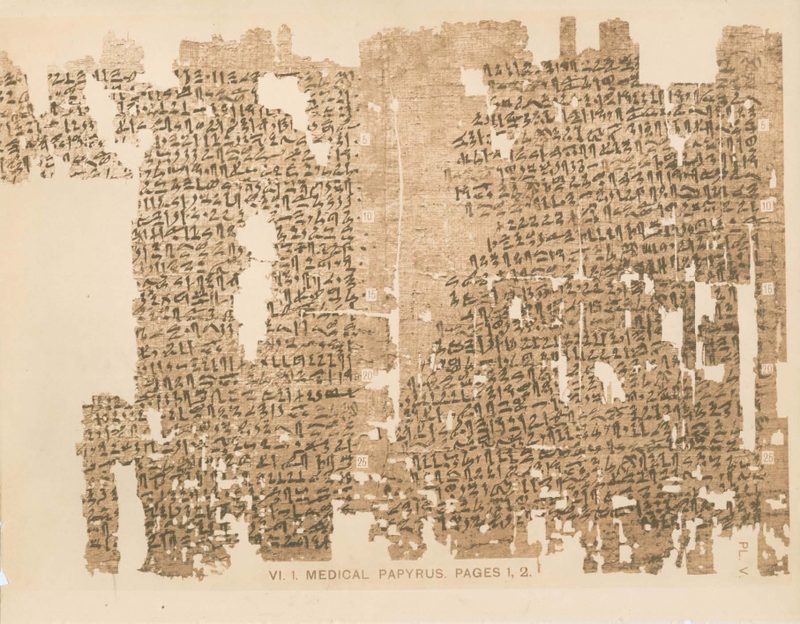
Written in Egypt around 1825 BCE, in the reign of Amenemhat III, the Kahun papyrus is the oldest known text on gynaecology and obstetrics. Its 34 cases cover diseases of women, fertility, pregnancy and contraception, most with a diagnosis and a treatment.
Key people
- Flinders Petrie
- Archaeologist who found the papyrus at Lahun in 1889
- Francis Ll. Griffith
- Egyptologist who restored, transcribed and translated it
Source
Flinders Petrie found the papyrus in 1889 near the modern town of Lahun in the Fayum, at the site he called Kahun, a town that had prospered under Amenemhat III and his successors. It was badly damaged. Francis Ll. Griffith restored it in 1890 and in 1898 published it in facsimile with a hieroglyphic transcription and an English translation. It is kept in the Petrie Museum of Egyptian Archaeology at University College London as UC 32057.
A note on the back is dated to year 29 of Amenemhat III, which places the text around 1825 BCE, in the Twelfth Dynasty of the Middle Kingdom. The papyrus is about a meter long and 32 centimeters high. Its three pages hold 34 cases, marked off in red ink. Most begin with the woman's symptoms, tell the physician what to say in diagnosis, and then give a treatment; some later entries are bare prescriptions. None proposes surgery.
Many diagnoses blame the womb for pain elsewhere in the body. In Stephen Quirke's translation for University College London, the physician is to say of a woman whose eyes ache until she cannot see that it is discharges of the womb in her eyes; she is to be fumigated with incense and fresh oil and fed a fresh donkey's liver. For a woman ill from her womb wandering, the physician asks what she smells and fumigates her with it. Other remedies use carob, cow's milk, honey and oil.
The last sections turn to conception, with incense, fresh oil, dates and sweet beer. Helena Trindade Lopes and Ronaldo Gurgel Pereira read the next lines as contraceptive recipes using crocodile dung, honey and natron; in Quirke's translation the crocodile dung line opens 'For preventing' and the next word is lost. The papyrus seems to have been compiled from a practitioner's notes or handbook. After Griffith's edition it drew little close study until H. Grapow's survey of Egyptian medical papyri, published between 1954 and 1973.
Keep exploring
 Read next · same disease or problem
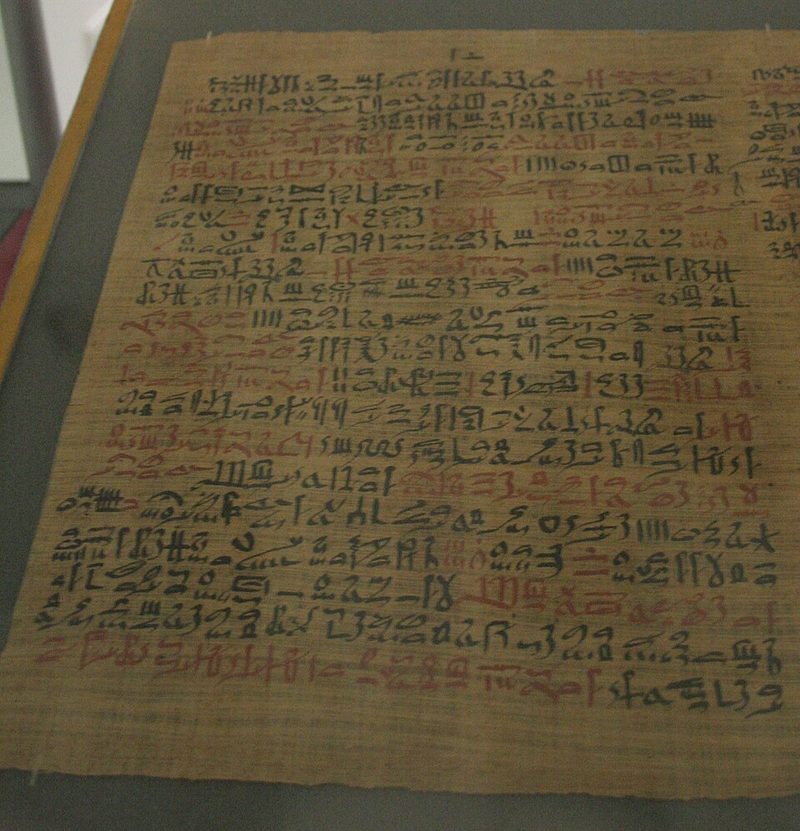
The Ebers Papyrus (c. 1550 BCE)
Both Egyptian papyri give remedies for women's complaints, the Kahun text alone and the Ebers among nearly 900 prescriptions. The Ebers scroll shows the wider Egyptian practice, where remedies of plants, minerals and dung sat beside healing spells.
Read this moment
Read next · same disease or problem
The Ebers Papyrus (c. 1550 BCE)
Both Egyptian papyri give remedies for women's complaints, the Kahun text alone and the Ebers among nearly 900 prescriptions. The Ebers scroll shows the wider Egyptian practice, where remedies of plants, minerals and dung sat beside healing spells.
Read this moment
 Today on The Clinical Times
Love to Dream recalls portable baby sound machine over fire and burn risk
Love to Dream has recalled its portable Sleep Machine because its lithium-ion battery can overheat while charging with an incompatible charger, creating a risk of fire and burns.
Read today’s top stories
Today on The Clinical Times
Love to Dream recalls portable baby sound machine over fire and burn risk
Love to Dream has recalled its portable Sleep Machine because its lithium-ion battery can overheat while charging with an incompatible charger, creating a risk of fire and burns.
Read today’s top stories
All 526 moments in the history of medicine. This one is in chapter 1, The ancient world
Connected moments
How this moment links to others in the history of medicine, and what you will find in each.
-
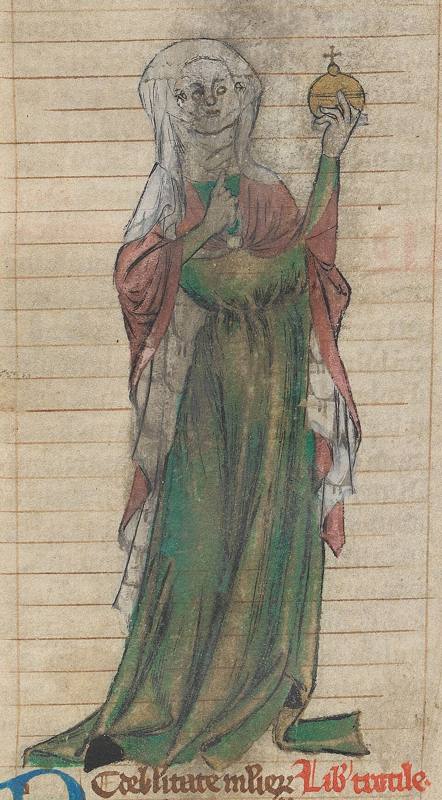 Same disease or problemc. 1100Salerno's medical school and the TrotulaBoth are early texts devoted to women's medicine, one from Middle Kingdom Egypt and one from medieval Salerno. The Trotula shows how three Salernitan texts, one from a woman healer named Trota, became medieval Europe's leading work on the subject.Read this moment
-
 Same disease or problem1960Enovid: First FDA-Approved Oral Contraceptive PillThe Kahun papyrus may hold some of the oldest recipes for preventing pregnancy, using crocodile dung, honey and natron. The Enovid story shows the same aim met by a pill, the first oral contraceptive, approved by the FDA in 1960.Read this moment