Public Health
1853
The Vaccination Act of 1853
The Vaccination Act of 1853 required parents in England and Wales to have each newborn vaccinated against smallpox within three months, with fines of up to 20 shillings for refusal. Later Acts widened compulsion and met organized resistance.
Parliament passed An Act further to extend and make compulsory the Practice of Vaccination on 20 August 1853. Two earlier Acts had extended vaccination against smallpox; this one made it a legal duty. It applied to every child born in England or Wales after 1 August 1853.
Within six weeks the Poor Law guardians of every parish or union had to divide their areas into vaccination districts, subject to the Poor Law Board, and fix a place in each where a medical officer or contracted practitioner would attend on advertised days to vaccinate anyone not already protected. The father or mother had to bring each baby within three months of birth. If the parents had died or were ill, absent or unable, whoever had care of the child had four months. On the eighth day after the operation the child was brought back so the vaccinator could inspect the result. Vaccinators were paid at least one shilling and sixpence for each successful case near their residence, and two shillings and sixpence farther away.
Paper followed every child. The vaccinator gave the parent a certificate of successful vaccination and sent a duplicate to the registrar of births and deaths, who kept a register of them. Within seven days of registering an unvaccinated child's birth, the registrar had to give the parents written notice of their duty and of where and when vaccination was offered. A child judged unfit could be put off for two months at a time on a renewable certificate, and one found insusceptible to the vaccine was excused. A parent who failed to comply could be fined up to 20 shillings before two justices of the peace, and the fines went to poor relief.
Compulsion then widened. An Act of 1867 extended the requirement to children up to 14 and added penalties for refusal. Opponents organized in the Anti-Vaccination League and the Anti-Compulsory Vaccination League, raising sanitary, religious, scientific and political objections and the claim of personal liberty, and a National Anti-Compulsory Vaccination League was founded in 1874. An Act of 1898 added a conscientious objector clause, under which parents who doubted that vaccination was safe or effective could obtain a certificate of exemption.
Keep exploring
 Read next · built on
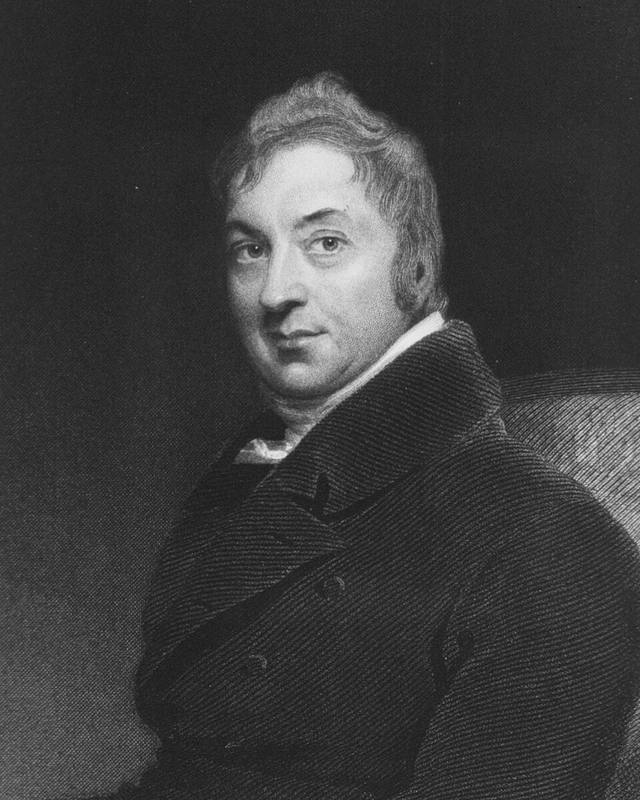
Jenner's smallpox vaccination (cowpox inoculation) (1796)
The 1853 act made Jenner's cowpox vaccination a legal duty for every newborn in England and Wales. Jenner's story shows the 1796 test on a boy that began vaccination.
Read this moment
Read next · built on
Jenner's smallpox vaccination (cowpox inoculation) (1796)
The 1853 act made Jenner's cowpox vaccination a legal duty for every newborn in England and Wales. Jenner's story shows the 1796 test on a boy that began vaccination.
Read this moment
 Today on The Clinical Times
Love to Dream recalls portable baby sound machine over fire and burn risk
Love to Dream has recalled its portable Sleep Machine because its lithium-ion battery can overheat while charging with an incompatible charger, creating a risk of fire and burns.
Read today’s top stories
Today on The Clinical Times
Love to Dream recalls portable baby sound machine over fire and burn risk
Love to Dream has recalled its portable Sleep Machine because its lithium-ion battery can overheat while charging with an incompatible charger, creating a risk of fire and burns.
Read today’s top stories
All 526 moments in the history of medicine. This one is in chapter 4, Germs, numbers and clean water
Connected moments
How this moment links to others in the history of medicine, and what you will find in each.
-
 Led to1885The Leicester anti-vaccination movementCompulsion under the Vaccination Acts provoked organized resistance, which peaked in Leicester's mass protest of 1885. That story shows a town that stopped enforcing the law and controlled smallpox by isolation and watching contacts.Read this moment
-
 Same disease or problem1905Jacobson v. MassachusettsEngland made infant vaccination compulsory in 1853, and in 1905 the US Supreme Court upheld a state's power to require it during an epidemic. The Jacobson story shows a $5 fine for refusing and the limits the Court set.Read this moment
-
 Same disease or problem1998Wakefield's retracted MMR paperAn 1898 clause let parents who doubted vaccination's safety claim exemption, and a century later a retracted paper fed the same doubts. The Wakefield story shows falling MMR uptake blamed for British measles outbreaks.Read this moment