Public Health
1905
Jacobson v. Massachusetts
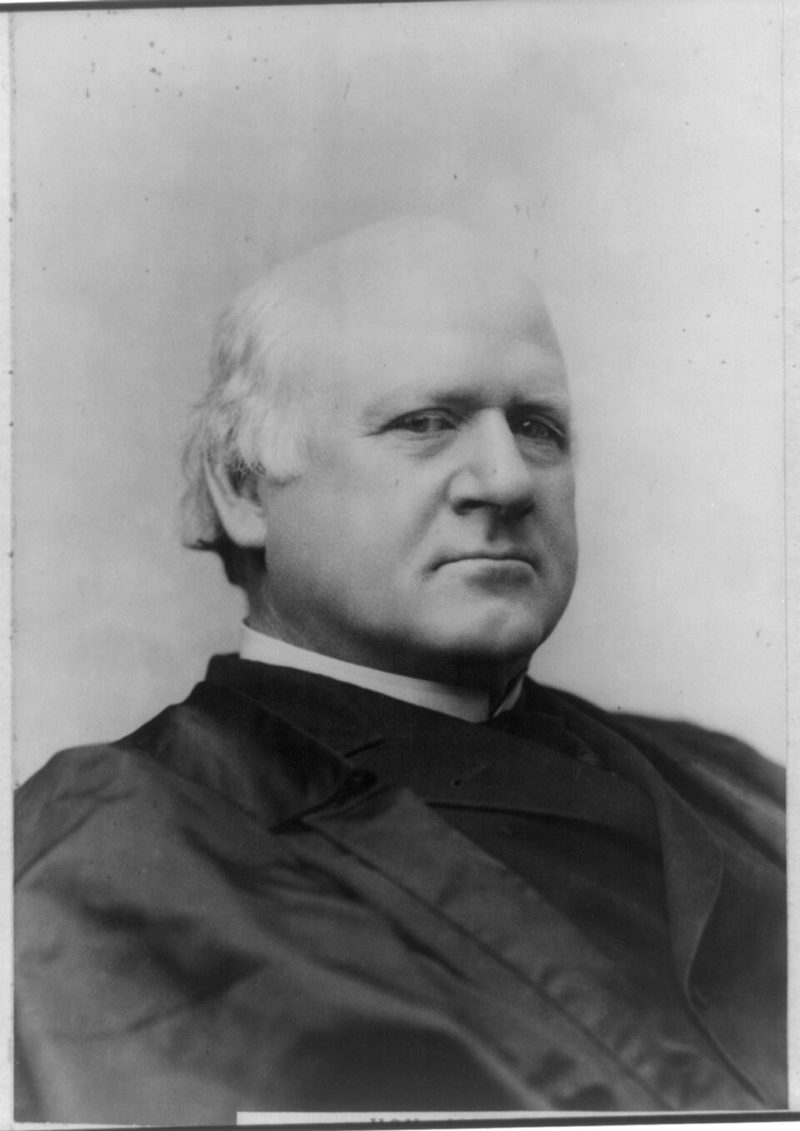
On 20 February 1905 the US Supreme Court upheld a Massachusetts law that let local boards of health require smallpox vaccination during an epidemic, on pain of a $5 fine. It affirmed the states' police power over public health while noting limits on its use.
Key people
- Henning Jacobson
- Cambridge resident fined for refusing smallpox vaccination in 1902
- Oliver Wendell Holmes
- Justice who cited Jacobson in upholding forced sterilization in 1927
Source
Jacobson v. Massachusetts, 197 U.S. 11 (1905). (opens in a new tab)
A Massachusetts statute let city boards of health require vaccination when they judged it necessary for public health or safety. An adult who refused could be fined $5, but the law gave no power to vaccinate anyone by force. With smallpox prevalent and increasing in Cambridge, the city's board of health ordered on 27 February 1902 that all inhabitants not successfully vaccinated since 1 March 1897 be vaccinated or revaccinated, and it provided free vaccination.
Henning Jacobson, an adult in Cambridge, refused, saying that he and his son had reacted badly to earlier vaccinations. He was prosecuted and fined, the state courts upheld the conviction, and he appealed to the US Supreme Court. He argued that compulsory vaccination was unreasonable, arbitrary and oppressive, and an assault on his person.
The Court decided the case on 20 February 1905, with Justice Harlan writing for the majority and Justices Brewer and Peckham dissenting. Harlan held that the liberty the Constitution protects is not an absolute right to be free of all restraint at all times. Under its police power, he wrote, a community has the right to protect itself against an epidemic that threatens its members, and the legislature could leave the judgment of necessity to a local board of health.
The opinion also set limits. Courts could intervene if such a power was used in an arbitrary or oppressive way, or went beyond what public safety reasonably required. Harlan added that the law should not be read to force vaccination on an adult for whom it would be cruel and inhuman, or who could show that it would seriously impair his health or probably cause his death.
The Court did not always apply those limits. In 1922, in Zucht v. King, it upheld a city rule barring unvaccinated children from school in a brief opinion that did not ask whether the rule was necessary. In 1927, in Buck v. Bell, Justice Oliver Wendell Holmes cited Jacobson when upholding Virginia's law on the involuntary sterilization of people in state institutions judged feeble-minded.
Keep exploring
 Read next · led to
Buck v. Bell and compulsory sterilization (1927)
Justice Holmes cited Jacobson when he upheld Virginia's forced sterilization law, reasoning from compulsory vaccination. The Buck v Bell story shows how that argument was used against people judged feeble minded.
Read this moment
Read next · led to
Buck v. Bell and compulsory sterilization (1927)
Justice Holmes cited Jacobson when he upheld Virginia's forced sterilization law, reasoning from compulsory vaccination. The Buck v Bell story shows how that argument was used against people judged feeble minded.
Read this moment
 Today on The Clinical Times
Love to Dream recalls portable baby sound machine over fire and burn risk
Love to Dream has recalled its portable Sleep Machine because its lithium-ion battery can overheat while charging with an incompatible charger, creating a risk of fire and burns.
Read today’s top stories
Today on The Clinical Times
Love to Dream recalls portable baby sound machine over fire and burn risk
Love to Dream has recalled its portable Sleep Machine because its lithium-ion battery can overheat while charging with an incompatible charger, creating a risk of fire and burns.
Read today’s top stories
All 526 moments in the history of medicine. This one is in chapter 5, Cures and codes
Connected moments
How this moment links to others in the history of medicine, and what you will find in each.
-
 Same disease or problem1885The Leicester anti-vaccination movementJacobson challenged compulsory vaccination in court, and Leicester had fought it in the streets twenty years earlier. Leicester's story shows a town that stopped enforcing the law and relied on isolation instead.Read this moment
- Same disease or problem1853The Vaccination Act of 1853Jacobson tested a state's power to require vaccination, and England had made infant vaccination compulsory in 1853. That act's story shows the fines and registers that enforced it and the resistance it met.Read this moment