Foundational Discovery
1858
Gray's Anatomy
Henry Gray's textbook, illustrated with 363 engravings from drawings by Henry Vandyke Carter, tied the anatomy of each region to the surgery done there. It has stayed in print under Gray's name for more than 150 years.
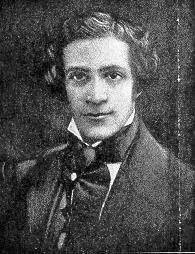
Key people
- Henry Gray
- Lecturer on anatomy at St George's Hospital and author
- Henry Vandyke Carter
- Former St George's demonstrator who made all the drawings
Source
Henry Gray, 28, of St George's Hospital in London, planned in 1855 a new textbook for students and surgeons. For the pictures he turned to Henry Vandyke Carter, 24, a fellow St George's man with a gift for anatomical drawing. The two had first met in the St George's dissecting room around 1848. They dissected together for at least 18 months and worked through 1856 and 1857.
Anatomy, Descriptive and Surgical came out from John W. Parker and Son in August 1858, in a first printing of 2,000 copies. The preface stated the aim plainly: to apply anatomy to practical surgery. Under each section, in small type, came notes on why exact knowledge of that part mattered in an operation or a fracture. The 363 engravings were cut by Butterworth and Heath. Carter made every drawing, the preface said, most of them from or checked against the joint dissections, though some plates, such as the lymphatics after Mascagni, were copied from older works. Most of the drawings carried the names of the structures on the figure itself, unusual in textbooks of the time. The title page credited Carter with the drawings and with a share in the dissections, in type smaller than Gray's name. A Philadelphia edition followed in 1859.
The money went mostly to Gray. He had a royalty of £150 on every 1,000 copies sold; Carter was paid a single fee of £150. Carter left for India, where he became professor of anatomy at Grant Medical College in Bombay. Gray published a second edition in 1860. In 1861 he caught smallpox from his nephew and died on 13 June, aged 34.
The book kept his name. By the 17th edition, of 1909, Carter's name had been dropped from it altogether. In 2015 it was going into its 41st edition.
Keep exploring
 Read next · same disease or problem
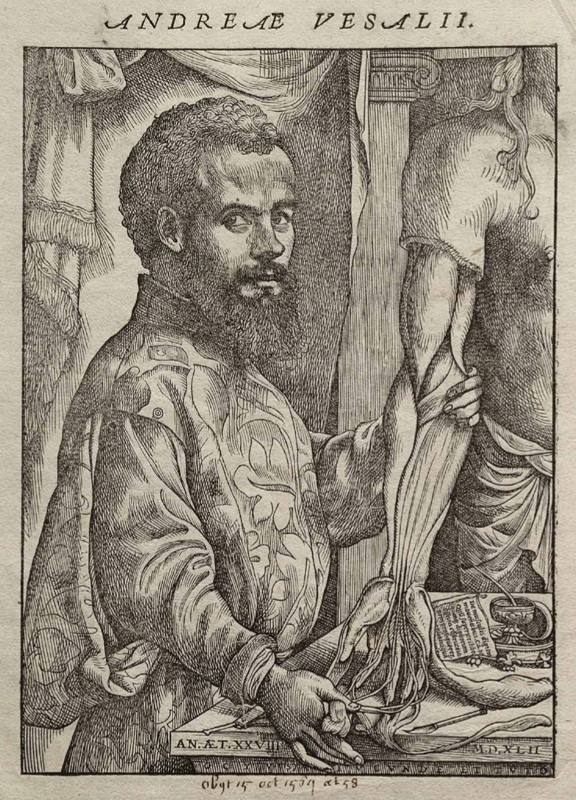
Vesalius's De Humani Corporis Fabrica (1543)
Both were anatomy textbooks built on the authors' own dissections, with illustrations by skilled artists. Vesalius's story shows the 1543 book whose woodcuts were copied for centuries.
Read this moment
Read next · same disease or problem
Vesalius's De Humani Corporis Fabrica (1543)
Both were anatomy textbooks built on the authors' own dissections, with illustrations by skilled artists. Vesalius's story shows the 1543 book whose woodcuts were copied for centuries.
Read this moment
 Today on The Clinical Times
Love to Dream recalls portable baby sound machine over fire and burn risk
Love to Dream has recalled its portable Sleep Machine because its lithium-ion battery can overheat while charging with an incompatible charger, creating a risk of fire and burns.
Read today’s top stories
Today on The Clinical Times
Love to Dream recalls portable baby sound machine over fire and burn risk
Love to Dream has recalled its portable Sleep Machine because its lithium-ion battery can overheat while charging with an incompatible charger, creating a risk of fire and burns.
Read today’s top stories
All 526 moments in the history of medicine. This one is in chapter 4, Germs, numbers and clean water
Connected moments
How this moment links to others in the history of medicine, and what you will find in each.
-
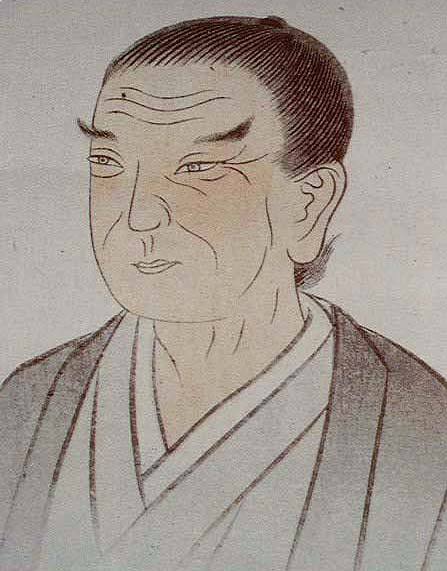 Same disease or problem1774Kaitai Shinsho, Western anatomy in JapaneseBoth were illustrated anatomy books that carried exact knowledge of the body to new readers. Kaitai Shinsho shows Japanese physicians translating a Dutch anatomy and coining Japanese words for its structures.Read this moment
-
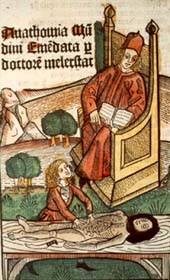 Same disease or problem1316Mondino de Luzzi's AnothomiaGray tied anatomy to surgery, while Mondino's manual followed a dissection from abdomen to head for students. Mondino's story shows the textbook European universities used until the middle of the 16th century.Read this moment