Neurology & Psychiatry
1924
Berger and the human electroencephalogram
On 6 July 1924 the Jena psychiatrist Hans Berger recorded a faint electrical current from a patient’s head, and by 1927 he could record through the intact skull. His 1929 report on the human electroencephalogram began a series that named alpha and beta waves.
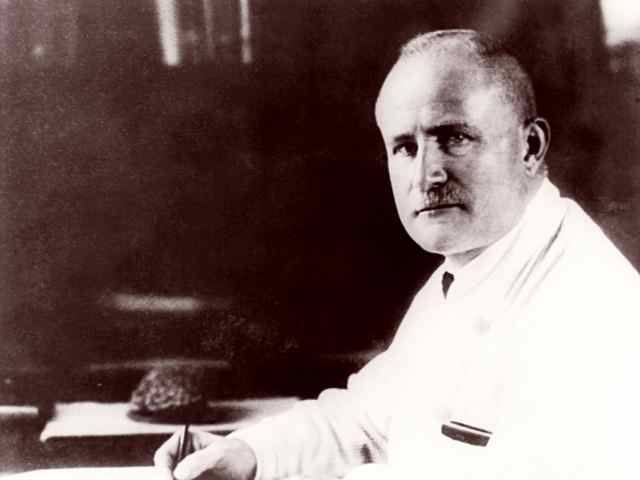
Key people
- Hans Berger
- Jena psychiatrist who first recorded brain activity through the intact human skull
- Douglas Adrian
- Confirmed the alpha rhythm in 1934 and named it the Berger rhythm
Source
Hans Berger came to brain waves through a theory of mental energy. A psychiatrist at the university clinic in Jena, where he had worked since qualifying in 1897 and became chairman in 1919, he spent years measuring blood flow and temperature in the brains of patients with skull defects. He wanted to find how much of the brain's energy became electricity and how much might remain as what the Danish psychologist Alfred Lehmann called psychic energy. In 1902 and 1907 he tried to repeat, in animals, Richard Caton's recordings of currents from the exposed brain, with marginal results.
He took up the problem again in 1924. On 6 July, after days of adjusting a small Edelmann string galvanometer of the kind used for electrocardiograms, he saw a feeble current between electrodes placed 4 cm apart around a scar on a patient's scalp. Grants from the Carl Zeiss Foundation (his brother was an engineer at the Zeiss company) paid for more sensitive Siemens instruments from 1926, and by 1927 he could record through the intact skull. Working alone between 5 and 8 in the evening, he took 73 records from his son Klaus, whose hair was cut as short as possible, 56 from himself and hundreds from patients.
His first report, on the electroencephalogram of man, appeared in the Archiv für Psychiatrie und Nervenkrankheiten in 1929, the start of a series of 14 papers, mostly in German psychiatry journals. He described larger, slower alpha waves and smaller, faster beta waves, and showed that opening the eyes blocked the alpha rhythm. By 1931 he had 1,133 records from 76 people. His 1938 summary added changes with age, in epilepsy, dementia, tumors and hemorrhage, and the flat record of brain death.
His reports met skepticism: to many it seemed unlikely that any orderly rhythm could be picked up from the scalp, and the Berlin-Buch group of neurophysiologists thought him naive. Recognition came in 1934, when Douglas Adrian, a 1932 Nobel laureate, and his engineer Brian Matthews set out to show the rhythm was an artifact, reproduced it along with its blocking by opened eyes, and called it the Berger rhythm. Their English-language report in a physiology journal carried the method abroad. Berger left the directorship of the Jena clinic in 1938. Suffering from severe depression and heart failure, he took his own life on 1 June 1941.
Keep exploring
 Read next · built on
Einthoven's Electrocardiograph (c. 1903)
Berger first recorded brain currents with a string galvanometer of the kind built for electrocardiograms. Einthoven's story shows the instrument that first recorded the heart well enough for clinical use.
Read this moment
Read next · built on
Einthoven's Electrocardiograph (c. 1903)
Berger first recorded brain currents with a string galvanometer of the kind built for electrocardiograms. Einthoven's story shows the instrument that first recorded the heart well enough for clinical use.
Read this moment
 Today on The Clinical Times
Love to Dream recalls portable baby sound machine over fire and burn risk
Love to Dream has recalled its portable Sleep Machine because its lithium-ion battery can overheat while charging with an incompatible charger, creating a risk of fire and burns.
Read today’s top stories
Today on The Clinical Times
Love to Dream recalls portable baby sound machine over fire and burn risk
Love to Dream has recalled its portable Sleep Machine because its lithium-ion battery can overheat while charging with an incompatible charger, creating a risk of fire and burns.
Read today’s top stories
All 526 moments in the history of medicine. This one is in chapter 5, Cures and codes
Connected moments
How this moment links to others in the history of medicine, and what you will find in each.
-
 Led to1968Harvard Criteria for Brain DeathBerger described the flat record of brain death, and in 1968 a flat EEG became one of the Harvard criteria for it. That story shows how brain death came to be defined.Read this moment
-
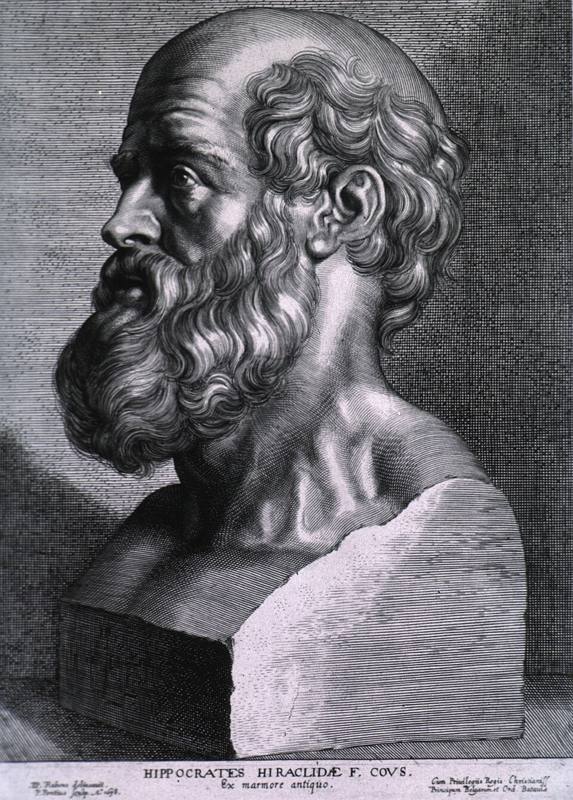 Same disease or problemc. 400 BCEThe Hippocratic CorpusBerger recorded changes in the brain's electricity in epilepsy, the disease a Hippocratic author first placed in the brain. The Corpus shows that author scorning the idea that epilepsy was sacred.Read this moment