Cardiology
1929
Forssmann's cardiac catheterization
In 1929 Werner Forssmann, a surgical trainee near Berlin, passed a catheter 65 cm from a vein at his own elbow into his right atrium and confirmed it by X-ray. From 1941 André Cournand and Dickinson Richards in New York made it a clinical tool.
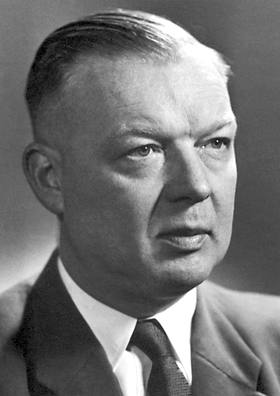
Key people
- Werner Forssmann
- Surgical trainee who catheterized his own heart in 1929
- André Cournand
- Bellevue physician who developed catheterization as a clinical method
- Dickinson W. Richards
- Cournand's collaborator at Bellevue; shared the 1956 Nobel Prize
Source
Since 1861, when Chauveau and Marey led manometers from the neck vessels into the heart chambers of a living animal, physiologists had measured pressures inside animal hearts. In patients the right side of the heart was out of reach. Doctors could sample arterial blood and measure pressure in peripheral arteries and surface veins, but not the pressure in the right ventricle or the mixed venous blood returning to the heart. As late as 1928 a textbook held that in man one was confined to indirect methods.
Werner Forssmann passed his state medical examination in Berlin in 1929 and went for surgical training to the August Victoria Home at Eberswalde. Working from Chauveau and Marey's animal method, he put a cannula into a vein at his own elbow, pushed a catheter 65 cm along it, and walked to the X-ray department, where a film showed the tip lying in his right atrium. He described the method in the Klinische Wochenschrift in November 1929.
A few clinics, in Prague and Lisbon, took the method up, and in 1930 O. Klein in Prague used the catheter to measure cardiac output by Fick's principle in a series of patients. Forssmann himself met criticism that G. Liljestrand of the Nobel committee later called exaggerated and based on an unfounded belief that the procedure was dangerous, and he lost the will to continue. He trained in urology, was a prisoner of war until 1945, and later practised as a urologist at Bad Kreuznach.
In New York, André Cournand and Dickinson Richards, working in the Columbia University division at Bellevue Hospital, wanted direct measurements from the right heart for their studies of circulation in disease. After several years of preparation their group reported cardiac catheterization in man in 1941. They used it to show that wound shock during the Second World War involved a large fall in cardiac output from reduced return of blood to the heart, to measure shunts in congenital heart disease, and to record raised pulmonary artery pressure in chronic lung disease.
Forssmann, Cournand and Richards shared the 1956 Nobel Prize in Physiology or Medicine. In his Nobel lecture Forssmann noted that Cournand, too, had faced ethical objections to the catheter in 1941, twelve years after his own. He died on 1 June 1979.
Keep exploring
 Read next · built on
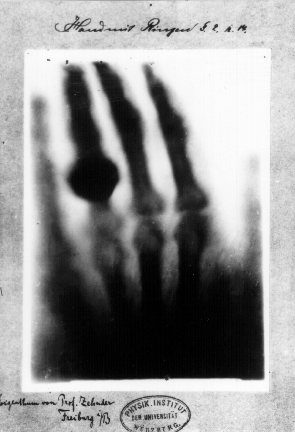
Roentgen's discovery of X-rays (1895)
Forssmann walked to the X ray department to prove the catheter he had pushed into his own heart was there. Roentgen's story shows the rays that let doctors see inside a living body.
Read this moment
Read next · built on
Roentgen's discovery of X-rays (1895)
Forssmann walked to the X ray department to prove the catheter he had pushed into his own heart was there. Roentgen's story shows the rays that let doctors see inside a living body.
Read this moment
 Today on The Clinical Times
Love to Dream recalls portable baby sound machine over fire and burn risk
Love to Dream has recalled its portable Sleep Machine because its lithium-ion battery can overheat while charging with an incompatible charger, creating a risk of fire and burns.
Read today’s top stories
Today on The Clinical Times
Love to Dream recalls portable baby sound machine over fire and burn risk
Love to Dream has recalled its portable Sleep Machine because its lithium-ion battery can overheat while charging with an incompatible charger, creating a risk of fire and burns.
Read today’s top stories
All 526 moments in the history of medicine. This one is in chapter 5, Cures and codes
Connected moments
How this moment links to others in the history of medicine, and what you will find in each.
- Same disease or problem1977Grüntzig's coronary balloon angioplastyForssmann first threaded a catheter into a human heart, and Grüntzig used a balloon catheter to widen a narrowed coronary artery. His story shows the first angioplasty in an awake patient in 1977.Read this moment
-
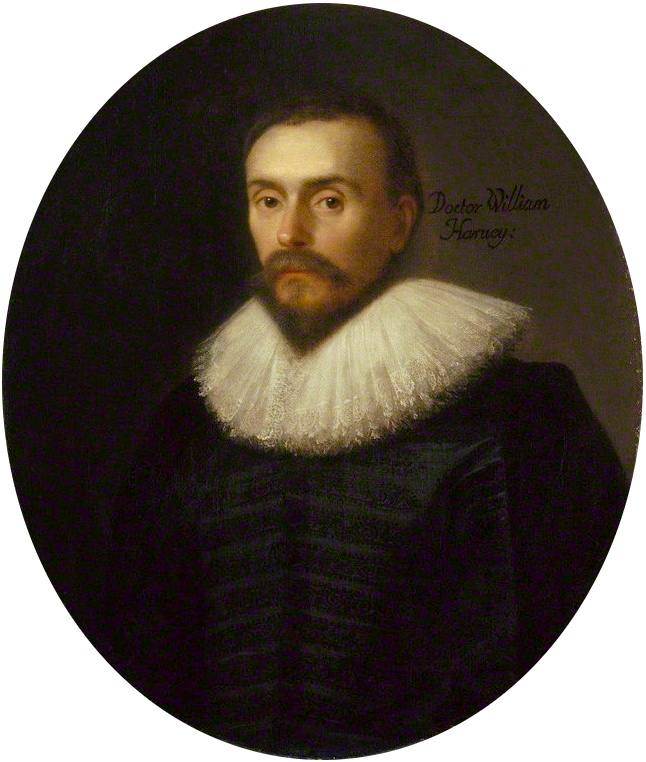 Same disease or problem1628Harvey's De Motu CordisForssmann reached the right side of the heart, where Harvey had shown the blood returns through the veins. Harvey's story shows the calculation that proved the blood circulates.Read this moment