Patients & Rights
1935
Marjory Warren and geriatric medicine
Given charge of a workhouse's chronically ill residents at West Middlesex Hospital in 1935, Marjory Warren assessed, classified and rehabilitated them, sending many home. Her methods and her case for hospital geriatric units helped make geriatrics a specialty in Britain's National Health Service.
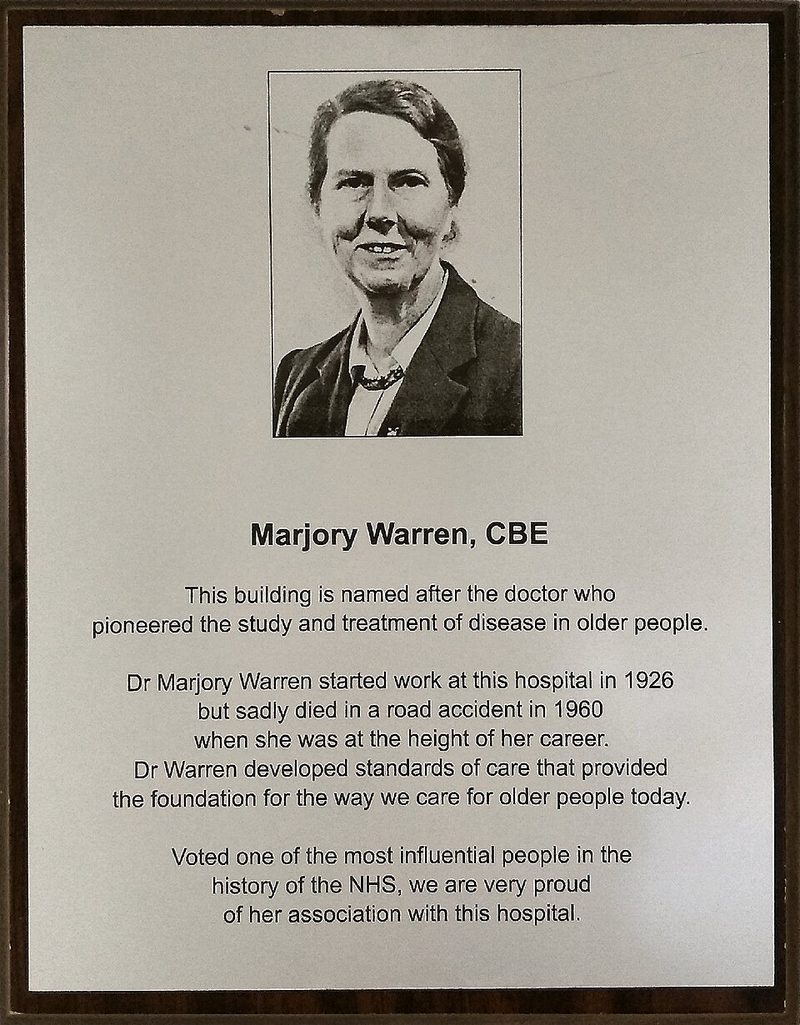
Key people
- Marjory Warren
- West Middlesex physician who built the first British geriatric unit
Source
Warren MW. Care of chronic sick. BMJ. 1943;2(4329):822-823. (opens in a new tab)
Before 1935 the doctors at the Isleworth Infirmary in Middlesex called the workhouse next door, Warkworth House, the Other Side. A doctor visited every few days to ask whether anyone was acutely ill. The Lancet, writing after her death in 1960, described single wards holding demented and noisy patients in cot beds, the incontinent, the bedridden, treatable sick people, others who were up all day, and unmarried mothers with infants.
Warren, a Londoner born in 1897, qualified in 1923, joined the infirmary as an assistant medical officer in 1926 and became deputy medical director in 1931. In 1935 the infirmary took over the workhouse to form the West Middlesex County Hospital, and its mostly elderly residents became her responsibility. During 1936 she examined more than 500 of them. She started with stroke patients, whom most doctors thought beyond help, and some improved with rehabilitation.
She classified patients so that those with similar needs shared wards staffed and equipped for them, upgraded the wards, based care plans on a full assessment of each patient's illness, mind and home situation, and ran a team that used active rehabilitation, bed-end exercises and appliances, several of her own design. She expected patients to work at recovery; asked whether she would use therapeutic rage to spur them on, she said yes. She discharged patients to their homes or to residential care and found jobs for some of the unmarried mothers.
Her only published outcome figures came from two wards in 1944 to 1946: of 1,364 patients admitted, 43 percent died in hospital, 26 percent went home, 10 percent went to residential care and 21 percent stayed as long-stay residents. In the BMJ in December 1943 and the Lancet in June 1946 she argued for a specialty of geriatrics, for geriatric units in general hospitals and for teaching students the care of older people. Her work drew the Ministry of Health's interest, and during the 1950s geriatric medicine became a recognized specialty in the National Health Service.
In 1947 she was one of eight doctors who founded the Medical Society for the Care of the Elderly, later the British Geriatrics Society, and she chaired its first committee. On her way to a conference in Germany she was fatally injured in a road accident, and she died in hospital at Maizières-lès-Metz, France, on 5 September 1960.
Keep exploring
 Read next · same disease or problem
Launch of the National Health Service (1948)
Warren's methods helped make geriatrics a specialty in the National Health Service. The NHS story shows Britain offering care free at the point of use to its whole population from 1948.
Read this moment
Read next · same disease or problem
Launch of the National Health Service (1948)
Warren's methods helped make geriatrics a specialty in the National Health Service. The NHS story shows Britain offering care free at the point of use to its whole population from 1948.
Read this moment
 Today on The Clinical Times
Love to Dream recalls portable baby sound machine over fire and burn risk
Love to Dream has recalled its portable Sleep Machine because its lithium-ion battery can overheat while charging with an incompatible charger, creating a risk of fire and burns.
Read today’s top stories
Today on The Clinical Times
Love to Dream recalls portable baby sound machine over fire and burn risk
Love to Dream has recalled its portable Sleep Machine because its lithium-ion battery can overheat while charging with an incompatible charger, creating a risk of fire and burns.
Read today’s top stories
All 526 moments in the history of medicine. This one is in chapter 5, Cures and codes
Connected moments
How this moment links to others in the history of medicine, and what you will find in each.
-
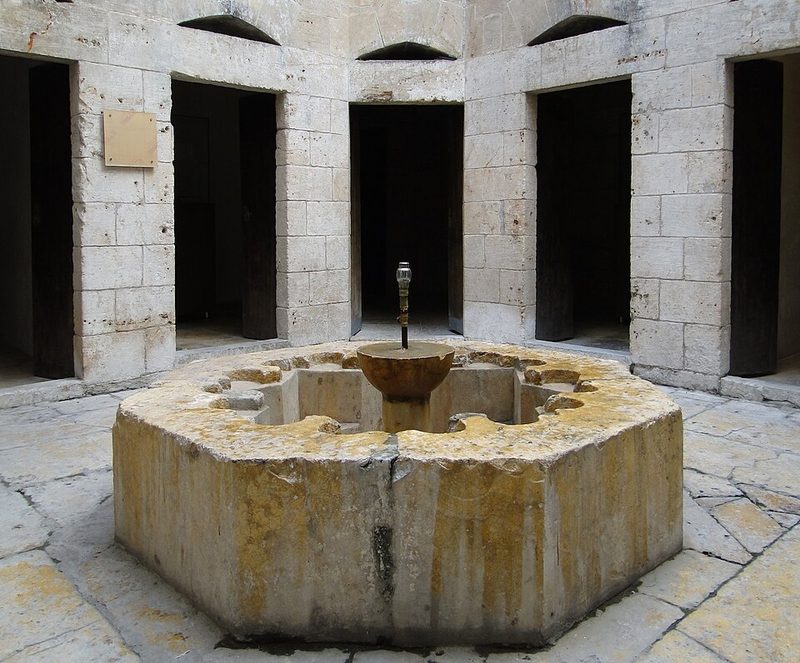 Same disease or problemc. 800 CEBimaristans of medieval IslamWarren took over old people left in a workhouse, and medieval Islamic hospitals had sheltered convalescents and old people with no family. The bimaristans show free hospitals for rich and poor.Read this moment
-
 Same disease or problem1967St Christopher's HospiceBoth changed care for people medicine had written off, Warren for the chronically ill elderly and Saunders for the dying. The hospice story shows expert pain control joined with compassionate care.Read this moment