Patients & Rights
1951
The HeLa Cell Line
Cells taken in 1951 from Henrietta Lacks's cervical cancer at Johns Hopkins, without her knowledge or permission, became the first human cancer-cell line to grow endlessly in culture. Her family received no money, and gained a say over the cells' genome data only in 2013.
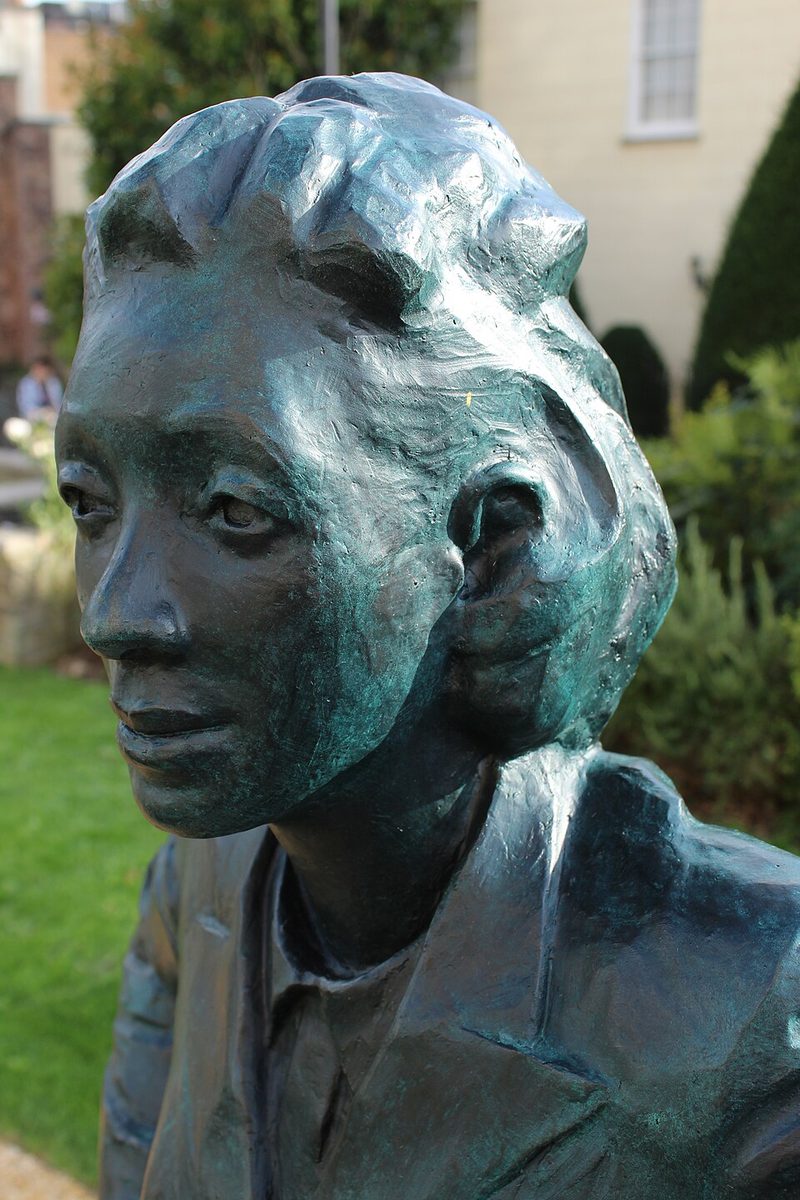
Key people
- Henrietta Lacks
- Patient whose cancer cells became the HeLa line
- George Gey
- Director of tissue culture research at Johns Hopkins
- Mary Kubicek
- Gey's laboratory assistant who cultured the HeLa cells
- Francis Collins
- NIH director who met the Lacks family in 2013
Source
Hudson KL, Collins FS. Family matters. Nature. 2013;500(7461):141-142. (opens in a new tab)
Henrietta Lacks was 30 and the mother of five when doctors at Johns Hopkins Hospital found an unusually aggressive cervical cancer in 1951. During her treatment a surgeon cut small samples from the tumor and from healthy cervical tissue for George Gey, the director of tissue culture research at Hopkins. No one asked her. Taking tissue this way, without the patient's knowledge or permission, was common practice at the time.
Gey had spent nearly 30 years trying to grow human cells that would reproduce endlessly in test tubes, and researchers had long tried without success. His laboratory assistant, Mary Kubicek, placed the malignant cells in culture medium under the label HeLa, from the first letters of Lacks's names. They doubled within 24 hours and never stopped. Lacks died of metastatic cancer at 31, and her autopsy took place at the Johns Hopkins morgue on 4 October 1951.
The cells were given to anyone who asked and spread to laboratories around the world. Johns Hopkins Magazine lists the polio vaccine, chemotherapy, gene mapping and in vitro fertilization among the work built on them. The cell line and what came from it became very profitable, while the Lacks family received no financial benefit and lived in poverty with limited access to health care. Rebecca Skloot's 2010 book, The Immortal Life of Henrietta Lacks, brought the story to a wide public.
In 2013 a team of researchers posted the whole genome sequence of a HeLa strain online. Posting it broke no rules, but the data gave some probabilistic information about Lacks and her descendants, and after criticism over privacy and consent the researchers took the sequence down and NIH director Francis Collins met the family. In August 2013 NIH and the Lacks family agreed on controlled access: NIH-funded researchers who sequence HeLa cells are expected to deposit the data in a controlled-access database, and requests to use it go to a six-member committee that includes two members of the family.
Keep exploring
 Read next · led to
Salk Inactivated Polio Vaccine Field Trial (Francis Report) (1955)
HeLa cells were sent to laboratories worldwide, and the polio vaccine is among the work built on them. The Salk story shows the field trial that proved the vaccine worked.
Read this moment
Read next · led to
Salk Inactivated Polio Vaccine Field Trial (Francis Report) (1955)
HeLa cells were sent to laboratories worldwide, and the polio vaccine is among the work built on them. The Salk story shows the field trial that proved the vaccine worked.
Read this moment
 Today on The Clinical Times
Love to Dream recalls portable baby sound machine over fire and burn risk
Love to Dream has recalled its portable Sleep Machine because its lithium-ion battery can overheat while charging with an incompatible charger, creating a risk of fire and burns.
Read today’s top stories
Today on The Clinical Times
Love to Dream recalls portable baby sound machine over fire and burn risk
Love to Dream has recalled its portable Sleep Machine because its lithium-ion battery can overheat while charging with an incompatible charger, creating a risk of fire and burns.
Read today’s top stories
All 526 moments in the history of medicine. This one is in chapter 5, Cures and codes
Connected moments
How this moment links to others in the history of medicine, and what you will find in each.
-
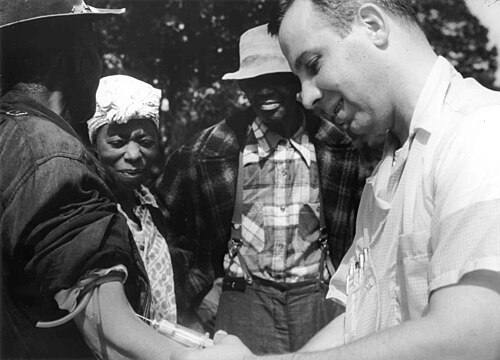 Same disease or problem1972Tuskegee Syphilis Study ExposedHenrietta Lacks's cells were taken without her knowledge, and the Tuskegee men were never told treatment was withheld. The Tuskegee story shows how a 1972 news report ended that study.Read this moment
-
 Same disease or problem2008Genetic Information Nondiscrimination ActThe posted HeLa genome revealed information about Lacks's descendants, and GINA barred insurers and employers from using genetic information against people. Its story shows what the law does and does not cover.Read this moment
-
 Same disease or problem1949Growing poliovirus in tissue cultureGey spent decades trying to grow human cells endlessly, and his roller tubes helped the Boston group grow poliovirus in culture. That story shows the method that made polio vaccines possible.Read this moment