Patients & Rights
1957
Salgo v. Stanford and informed consent
Ruling on a patient paralyzed after an aortogram, a California appeals court wrote that physicians who withhold facts a patient needs to consent are liable, and its opinion brought the phrase "informed consent" into American law.
Key people
- Martin Salgo
- Patient paralyzed after a translumbar aortogram in January 1954
- Absalom F. Bray
- Appeals court justice who wrote the 1957 opinion
- Frank Gerbode
- Attending surgeon, named as a defendant
Source
Martin Salgo, a 55-year-old shipping clerk in San Francisco, went to the surgeon Frank Gerbode with back, hip and abdominal pain and with leg pain that stopped him after a single block. An occluded abdominal aorta was suspected. On 8 January 1954, at Stanford University Hospital, a surgical fellow, Eldon Ellis, performed a translumbar aortogram: a needle into the aorta and two injections of iodinated contrast. The study confirmed a blockage just below the renal arteries. The next morning Salgo's legs were paralyzed, and the paralysis proved permanent.
Salgo sued the university's trustees, the hospital and Gerbode for negligence, failure to warn and unauthorized experimentation. Three possible causes were put forward: his disease itself, direct injury to the spinal cord from the contrast agent, Urokon, or constriction of the cord's blood vessels caused by it. The cause was never settled. A jury awarded him $250,000, which the trial court reduced to $213,355.
On 22 October 1957 Justice Absalom F. Bray of the California District Court of Appeal reversed the judgment because the jury had been wrongly instructed on res ipsa loquitur, and ordered a new trial. For the retrial he turned to disclosure. A physician who withheld facts needed for the patient's intelligent consent to treatment was liable, he wrote. Yet reciting every remote risk could frighten a patient into refusing an operation whose risks were acceptable, so a physician had some discretion in discussing risk, consistent with "the full disclosure of facts necessary to an informed consent."
Bray appears to have borrowed the wording. Steven Raper traces it to an amicus curiae brief for the American College of Surgeons, written by the attorneys Lawrence Howe Jr. and Paul G. Gebhard, which the court lightly edited; a source quoted by Alexander Capron says the whole paragraph was copied verbatim without attribution. The phrase had appeared in other settings before 1957, but Capron dates its entry into the legal lexicon to this case.
Salgo did not see the ruling. He died at Mount Zion Hospital in San Francisco on 19 July 1957, with no evidence that he ever had an operation. The appeals court denied a rehearing on 21 November, and on 18 December 1957 the California Supreme Court declined to hear the case, which ended it.
Keep exploring
 Read next · same disease or problem
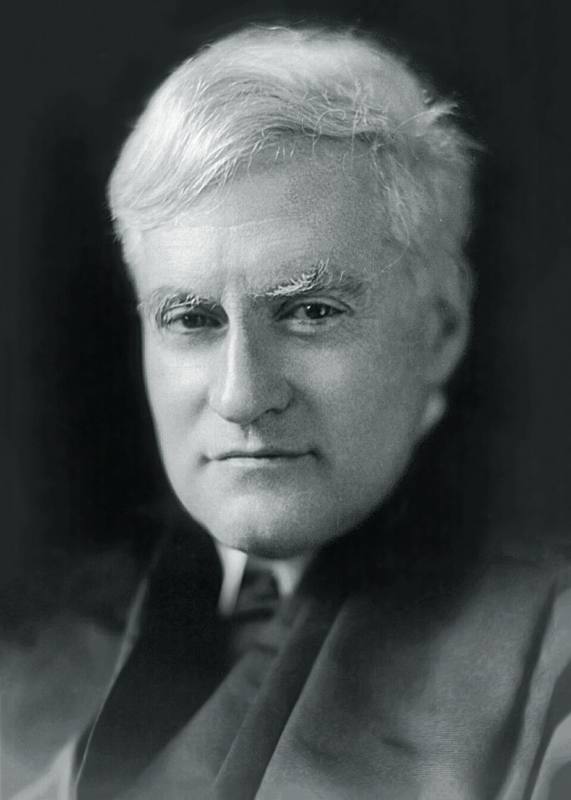
Schloendorff v. Society of New York Hospital (1914)
Both courts ruled on a patient's right to decide what doctors do to their body. Schloendorff shows Judge Cardozo in 1914 calling surgery without consent an assault, a reference point for later informed consent law.
Read this moment
Read next · same disease or problem
Schloendorff v. Society of New York Hospital (1914)
Both courts ruled on a patient's right to decide what doctors do to their body. Schloendorff shows Judge Cardozo in 1914 calling surgery without consent an assault, a reference point for later informed consent law.
Read this moment
 Today on The Clinical Times
Love to Dream recalls portable baby sound machine over fire and burn risk
Love to Dream has recalled its portable Sleep Machine because its lithium-ion battery can overheat while charging with an incompatible charger, creating a risk of fire and burns.
Read today’s top stories
Today on The Clinical Times
Love to Dream recalls portable baby sound machine over fire and burn risk
Love to Dream has recalled its portable Sleep Machine because its lithium-ion battery can overheat while charging with an incompatible charger, creating a risk of fire and burns.
Read today’s top stories
All 526 moments in the history of medicine. This one is in chapter 5, Cures and codes
Connected moments
How this moment links to others in the history of medicine, and what you will find in each.
- Same disease or problem1972Canterbury v. SpenceBoth cases asked what risks doctors must disclose before a procedure. Canterbury shows a court in 1972 setting that standard by what a reasonable patient would want to know, not by medical custom.Read this moment
-
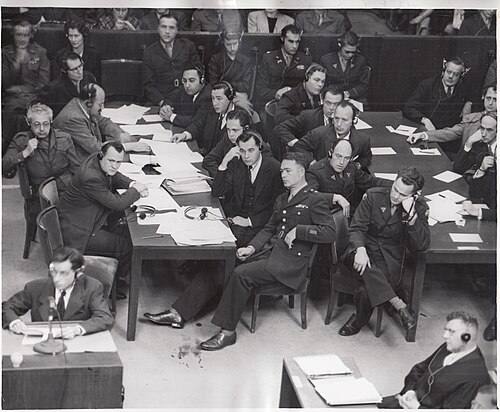 Same disease or problem1947The Nuremberg CodeNuremberg made consent the first rule for experiments, and Salgo brought the phrase informed consent into law for treatment. The Code shows how American judges wrote ten points into the 1947 verdict against Nazi doctors.Read this moment