Patients & Rights
1972
Canterbury v. Spence
A federal appeals court in Washington held that the law, not medical custom, decides what doctors must tell patients before treatment: every risk that would be material to a reasonable patient's decision, with narrow exceptions for emergencies and for disclosure that would harm the patient.
Key people
- Jerry W. Canterbury
- Patient paralyzed after back surgery who sued over undisclosed risk
- William Thornton Spence
- Surgeon who performed the laminectomy and did not disclose the risk
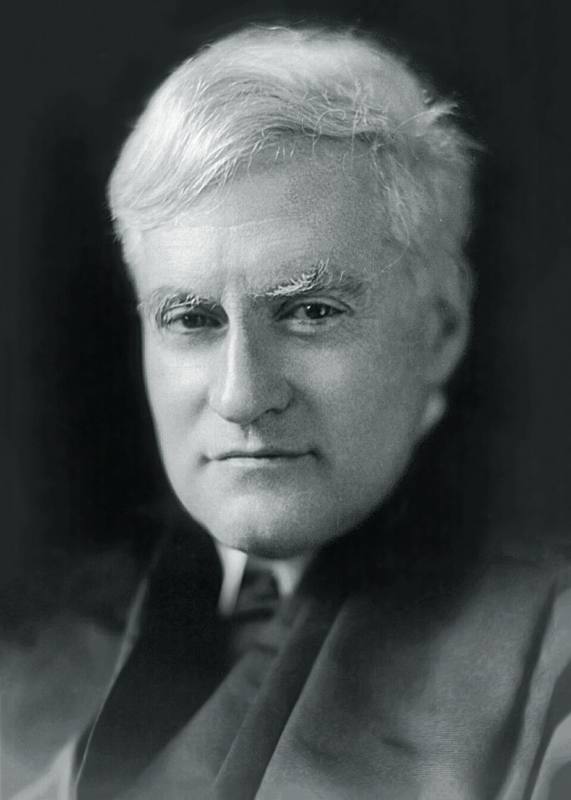
- Spottswood W. Robinson III
- Circuit judge who wrote the court's opinion
Source
Canterbury v. Spence, 464 F.2d 772 (D.C. Cir. 1972). (opens in a new tab)
Jerry Canterbury was 19 and a clerk-typist at the Federal Bureau of Investigation when, in December 1958, he began to have severe pain between his shoulder blades. After a myelogram, Dr. William Thornton Spence told him he needed a laminectomy, removal of the back arch of a vertebra, to repair what he suspected was a ruptured disc. Canterbury did not object or ask about the operation's details. His mother, a widow of slender means in Cyclone, West Virginia, could be reached through a neighbor's telephone.
The day after the operation Canterbury fell from his hospital bed while he had been left without help to urinate. Within hours the lower half of his body was paralyzed, and he needed a second operation. Years later he still walked on crutches, with paralysis of the bowels and urinary incontinence. At trial Spence testified that paralysis followed about one percent of laminectomies even without an injury, and that telling patients so was not good medical practice because it might frighten them away from needed surgery. The trial judge directed verdicts for Spence and the Washington Hospital Center, ruling that Canterbury had offered no medical evidence of negligence by Spence and no medical testimony linking the hospital's care to his injuries.
The Court of Appeals for the District of Columbia Circuit disagreed in an opinion by Judge Spottswood W. Robinson III, decided on 19 May 1972. Tying disclosure to medical custom, it said, would hand the decision to the physician alone, and respect for the patient's right of self-determination required a standard set by law. A risk had to be disclosed if it was material to the patient's decision. Whether disclosure would have changed that decision was to be judged objectively, by what a prudent person in the patient's position would have chosen if properly informed. Doctors were excused in a genuine emergency, when the patient could not consent and harm was imminent, and when disclosure itself threatened such harm to the patient that it was medically contraindicated.
A 2025 history published by Annals of Surgery Open calls Canterbury the famous case that set out this reasonable person standard. The appeals court sent the case back to the District Court for a new trial against both Spence and the hospital.
Keep exploring
 Read next · same disease or problem
Schloendorff v. Society of New York Hospital (1914)
Canterbury rested on the patient's right of self-determination that Judge Cardozo stated in 1914. Schloendorff shows the ruling that surgery without consent is an assault.
Read this moment
Read next · same disease or problem
Schloendorff v. Society of New York Hospital (1914)
Canterbury rested on the patient's right of self-determination that Judge Cardozo stated in 1914. Schloendorff shows the ruling that surgery without consent is an assault.
Read this moment
 Today on The Clinical Times
Love to Dream recalls portable baby sound machine over fire and burn risk
Love to Dream has recalled its portable Sleep Machine because its lithium-ion battery can overheat while charging with an incompatible charger, creating a risk of fire and burns.
Read today’s top stories
Today on The Clinical Times
Love to Dream recalls portable baby sound machine over fire and burn risk
Love to Dream has recalled its portable Sleep Machine because its lithium-ion battery can overheat while charging with an incompatible charger, creating a risk of fire and burns.
Read today’s top stories
All 526 moments in the history of medicine. This one is in chapter 6, Trials, scanners and rights