Patients & Rights
1914
Schloendorff v. Society of New York Hospital
The New York Court of Appeals wrote that surgery without a patient's consent is an assault. Judge Benjamin Cardozo's statement of every adult's right to decide what is done to their body became a standard reference point for informed consent.
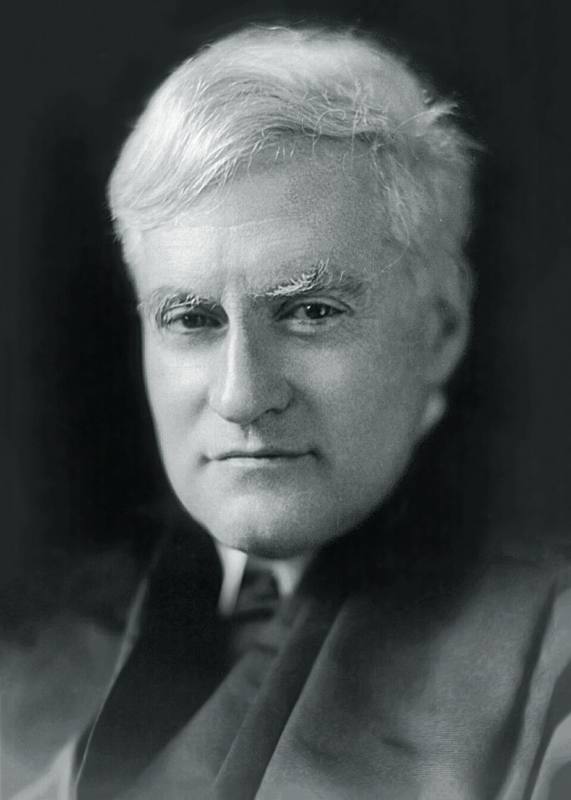
Key people
- Benjamin N. Cardozo
- Judge of the New York Court of Appeals who wrote the opinion
- Mary Schloendorff
- Patient operated on without consent; brought the suit
Source
Schloendorff v. Society of New York Hospital, 105 N.E. 92 (N.Y. 1914). (opens in a new tab)
Mary Schloendorff entered New York Hospital in January 1908 with a stomach disorder. She agreed to an examination under ether to learn the nature of a tumor, but she refused, by her account, to have any operation. While she was unconscious, surgeons removed the tumor, a fibroid. Gangrene followed, and some of her fingers had to be amputated.
She sued the hospital. On 14 April 1914 the New York Court of Appeals, in an opinion by Judge Benjamin Cardozo, ruled against her. The court held that the relation between a hospital and its physicians is not that of master and servant, so the hospital could not be held liable for what the surgeons had done, and the judgment for the hospital was affirmed.
On the way to that result Cardozo set down the principle the case is remembered for. Every adult of sound mind, he wrote, has the right to decide what shall be done with his own body, and a surgeon who operates without the patient's consent commits an assault and is liable in damages. He allowed one exception: an emergency in which the patient is unconscious and an operation is needed before consent can be obtained.
The sentence outlived the ruling. Paul Lombardo of Georgia State University College of Law describes it as a touchstone for discussions of informed consent. Lombardo also argues that the case is better read as an early malpractice dispute, in which hospital officials denied liability whatever the facts turned out to be.
Keep exploring
 Read next · same disease or problem
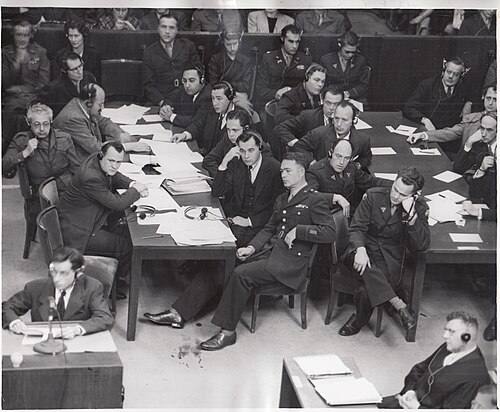
The Nuremberg Code (1947)
Cardozo held that every adult may decide what is done to their own body, and the Nuremberg Code made voluntary consent the first rule of human research. Its story shows the rules written into the verdict against Nazi doctors.
Read this moment
Read next · same disease or problem
The Nuremberg Code (1947)
Cardozo held that every adult may decide what is done to their own body, and the Nuremberg Code made voluntary consent the first rule of human research. Its story shows the rules written into the verdict against Nazi doctors.
Read this moment
 Today on The Clinical Times
Love to Dream recalls portable baby sound machine over fire and burn risk
Love to Dream has recalled its portable Sleep Machine because its lithium-ion battery can overheat while charging with an incompatible charger, creating a risk of fire and burns.
Read today’s top stories
Today on The Clinical Times
Love to Dream recalls portable baby sound machine over fire and burn risk
Love to Dream has recalled its portable Sleep Machine because its lithium-ion battery can overheat while charging with an incompatible charger, creating a risk of fire and burns.
Read today’s top stories
All 526 moments in the history of medicine. This one is in chapter 5, Cures and codes