Patients & Rights
1962
The battered-child syndrome
C. Henry Kempe and colleagues at the University of Colorado described serious physical abuse of young children by the adults caring for them as a clinical condition, the battered-child syndrome, and showed doctors how to recognize it, often from X-rays.
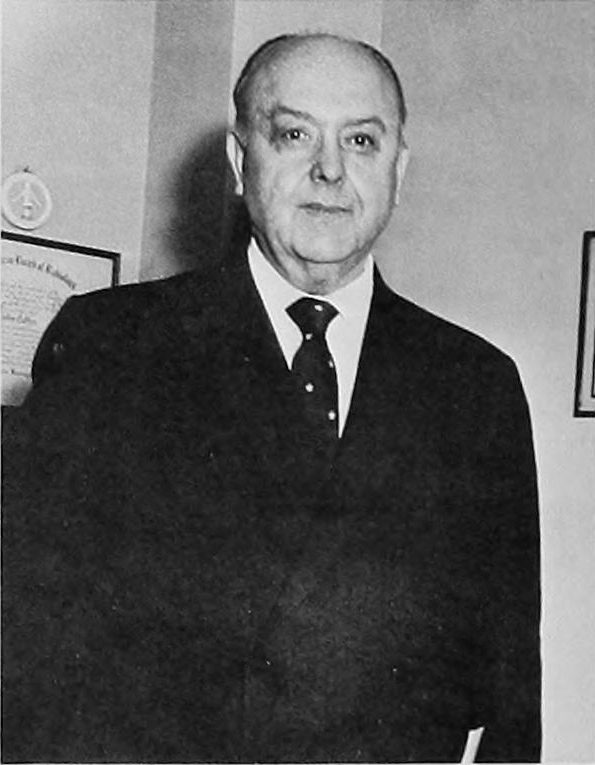
Key people
- C. Henry Kempe
- University of Colorado pediatrician and lead author of the 1962 paper
- John Caffey
- Pediatric radiologist who described unexplained infant fractures in 1946
- Fred Silverman
- Caffey-trained radiologist and co-author of the 1962 paper
Source
At the University of Colorado Hospital, the pediatrician C. Henry Kempe found that explanations for children's injuries that were plainly absurd were routinely accepted. Children who had clearly been beaten by their parents were diagnosed with rare brittle bone diseases, spontaneous bleeding under the skull, unexplained bleeding disorders or the catch-all label of failure to thrive.
Radiologists had seen the pattern first. In 1946 John Caffey, a pediatric radiologist at the Babies Hospital in New York, described six infants with subdural haematoma whose X-rays showed multiple fractures of the long bones, though none had any bone disease; he insisted the fractures looked traumatic. Fred Silverman, whom Caffey trained between 1945 and 1947, became director of roentgenology at Cincinnati Children's Hospital and in 1953 reported three more infants with skeletal injuries.
Kempe's article, 'The Battered-Child Syndrome', appeared in the Journal of the American Medical Association on 7 July 1962, written with Silverman, B. F. Steele, W. Droegemueller and H. K. Silver, experts in pediatrics, psychiatry, obstetrics and gynecology, and radiology. It defined the syndrome as a clinical condition in young children who had received serious physical abuse, generally at the hands of a parent or substitute parent. The authors also acknowledged that physicians were reluctant to believe parents could inflict such violence on their own children.
The idea crossed the Atlantic within a year. In 1963 two orthopedic surgeons, D. Li Griffiths of Manchester University and F. J. Moynihan of Guy's Hospital in London, published a British Medical Journal article on multiple epiphyseal injuries in babies, the battered baby syndrome, to publicize a condition they thought commoner than usually believed. Over the next 20 years, pediatricians and radiologists became the recognized experts on child battering in both Britain and the United States.
Keep exploring
 Read next · built on
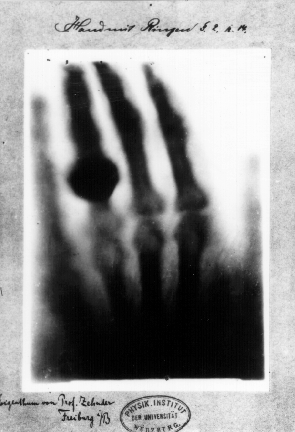
Roentgen's discovery of X-rays (1895)
Radiologists first saw the pattern of abuse as multiple unexplained fractures on X-rays, and Kempe taught doctors to read it. Roentgen's entry shows the 1895 discovery that let physicians see inside a living patient.
Read this moment
Read next · built on
Roentgen's discovery of X-rays (1895)
Radiologists first saw the pattern of abuse as multiple unexplained fractures on X-rays, and Kempe taught doctors to read it. Roentgen's entry shows the 1895 discovery that let physicians see inside a living patient.
Read this moment
 Today on The Clinical Times
Love to Dream recalls portable baby sound machine over fire and burn risk
Love to Dream has recalled its portable Sleep Machine because its lithium-ion battery can overheat while charging with an incompatible charger, creating a risk of fire and burns.
Read today’s top stories
Today on The Clinical Times
Love to Dream recalls portable baby sound machine over fire and burn risk
Love to Dream has recalled its portable Sleep Machine because its lithium-ion battery can overheat while charging with an incompatible charger, creating a risk of fire and burns.
Read today’s top stories
All 526 moments in the history of medicine. This one is in chapter 6, Trials, scanners and rights
Connected moments
How this moment links to others in the history of medicine, and what you will find in each.
-
 Same disease or problem1982Baby Doe and the treatment of disabled newbornsBoth asked when the harm or neglect of a child by parents becomes a medical and legal matter. Baby Doe shows how one infant's death led to the Child Abuse Amendments of 1984 on medical neglect.Read this moment
-
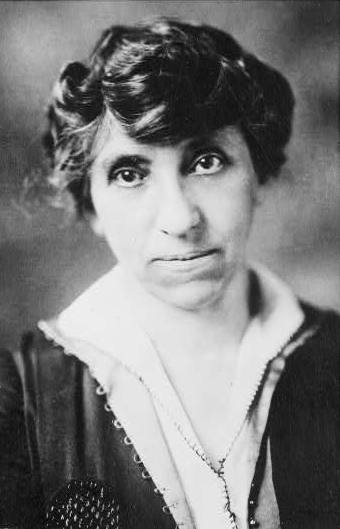 Same disease or problem1912The US Children's BureauBoth put the welfare of children at the center of medicine and public policy. The Children's Bureau entry shows how Julia Lathrop's staff traced every baby in whole towns and linked infant deaths to poverty.Read this moment