Epidemiology
1996
Variant CJD and mad cow disease
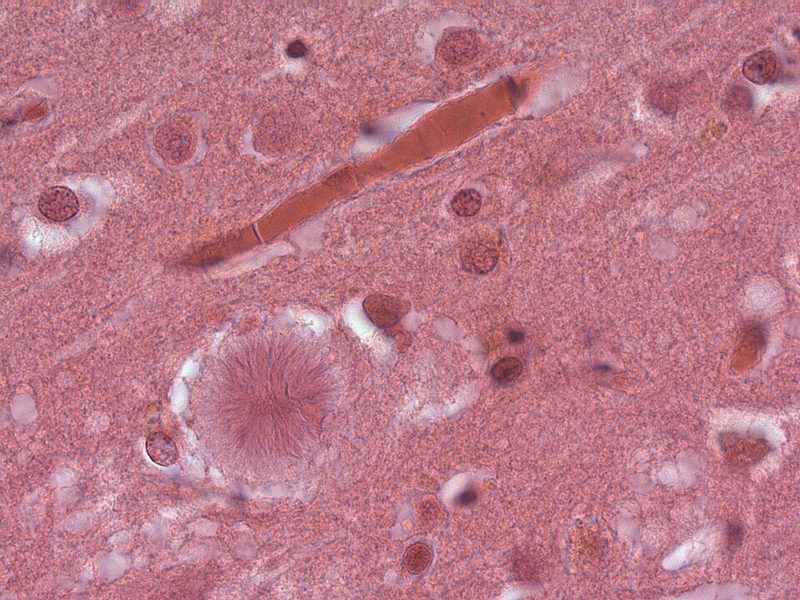
In 1996 British surveillance identified a new form of Creutzfeldt-Jakob disease in young people and raised the possibility of a link to mad cow disease in cattle, later confirmed. By 2024 there had been 232 cases worldwide, 178 of them in the UK.
Key people
- Robert G. Will
- First author of the 1996 Lancet report of variant CJD
Source
Bovine spongiform encephalopathy, a fatal prion disease of cattle, was first identified in two British cows in 1986; they had probably been infected in the 1970s. The likeliest cause was cattle feed made with meat-and-bone meal containing infected material from cows or sheep, and the epidemic spread as such feed was given to calves. More than 184,000 British cattle died of the disease between 1986 and 2015, in more than 35,000 herds, and cases peaked in 1993 at nearly 1,000 a week.
Because of the cattle epidemic, the UK restarted surveillance of Creutzfeldt-Jakob disease in 1990. Neurologists and neuropathologists referred suspected cases, relatives answered a standard questionnaire about risk factors, and about 70 percent of suspected cases had a neuropathological examination. Similar studies ran in France, Germany, Italy and the Netherlands from 1993 to 1995.
On 6 April 1996 Robert Will and colleagues reported in the Lancet ten British cases with a new neuropathological profile. The patients were young, their clinical findings were unusual, and they lacked the electroencephalogram pattern typical of CJD. No similar cases had been found in the other European countries. The authors called it a new variant of CJD, possibly unique to the UK, and wrote that a causal link to BSE was possible but could not be confirmed on that evidence alone. Molecular and animal studies later confirmed BSE prions as the source.
Human cases rose to a peak in 2000 and then declined. By 2024 there had been 232 recognized cases worldwide: 178 in the UK, 28 in France and smaller numbers in ten other countries. Every definite case tested but one carried two copies of methionine at codon 129 of the prion protein gene. Three people developed the disease after blood transfusion. The last known British patient died in 2016.
Keep exploring
 Read next · built on
Prusiner and prions (1982)
Molecular studies confirmed BSE prions as the cause, the infectious protein Prusiner had proposed. His entry shows the 1982 case for an agent with no DNA or RNA.
Read this moment
Read next · built on
Prusiner and prions (1982)
Molecular studies confirmed BSE prions as the cause, the infectious protein Prusiner had proposed. His entry shows the 1982 case for an agent with no DNA or RNA.
Read this moment
 Today on The Clinical Times
Love to Dream recalls portable baby sound machine over fire and burn risk
Love to Dream has recalled its portable Sleep Machine because its lithium-ion battery can overheat while charging with an incompatible charger, creating a risk of fire and burns.
Read today’s top stories
Today on The Clinical Times
Love to Dream recalls portable baby sound machine over fire and burn risk
Love to Dream has recalled its portable Sleep Machine because its lithium-ion battery can overheat while charging with an incompatible charger, creating a risk of fire and burns.
Read today’s top stories
All 526 moments in the history of medicine. This one is in chapter 6, Trials, scanners and rights
Connected moments
How this moment links to others in the history of medicine, and what you will find in each.
-
 Same disease or problem1957Kuru among the ForeBoth are human prion diseases of the brain, one tied to mad cow disease in cattle and one to funeral feasts among the Fore. The kuru entry shows the epidemic ending once the mortuary feasts stopped.Read this moment
-
 Same disease or problem1985First licensed HIV antibody testThree people caught variant CJD from blood transfusions, a reminder of the risks the first HIV blood test was meant to stop. The test entry shows US blood banks beginning to screen donations in 1985.Read this moment