Neurology & Psychiatry
2016
Nusinersen for spinal muscular atrophy
On 23 December 2016 FDA approved nusinersen, the first effective drug for spinal muscular atrophy. In the ENDEAR trial of infants, 51 percent of treated babies reached motor milestones against none given a sham procedure, and the risk of death fell by 63 percent.
Key people
- Richard S. Finkel
- First author of the ENDEAR trial of nusinersen in infants
- Eugenio Mercuri
- Co-author of the ENDEAR trial report
- Basil T. Darras
- Co-author of the ENDEAR trial report
Source
Spinal muscular atrophy is an autosomal recessive disorder of motor neurons caused by too little survival motor neuron (SMN) protein. It affects roughly 1 in 6,000 to 1 in 10,000 births, and a 2022 review of the drug's history called it the leading fatal disease of infancy. The muscles served by the dying motor neurons waste away.
Nusinersen is an antisense oligonucleotide, a short synthetic strand of nucleic acid. It alters how the pre-messenger RNA of a backup gene, SMN2, is spliced, so that cells make more full-length SMN protein. Biogen submitted it to FDA in September 2016, and on 23 December 2016 FDA approved Spinraza (nusinersen) injection for spinal muscular atrophy in children and adults.
The ENDEAR trial, reported by Richard Finkel, Eugenio Mercuri, Basil Darras and colleagues, randomly assigned infants with the disease to nusinersen or a sham procedure in a double-blind design. An interim analysis found that 21 of 51 treated infants (41 percent) had reached motor milestones on the Hammersmith Infant Neurological Examination against none of 27 controls, and the trial was stopped early. In the final analysis the figures were 37 of 73 (51 percent) against 0 of 37. Treated infants were less likely to die or need permanent assisted ventilation (hazard ratio 0.53), and their risk of death was 63 percent lower (hazard ratio 0.37). Infants who had been ill for a shorter time before treatment were more likely to benefit, and adverse events were similar in the two groups. The results appeared in the New England Journal of Medicine in November 2017.
Keep exploring
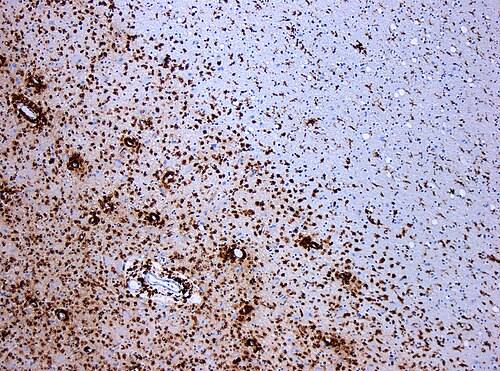 Read next · same disease or problem
Interferon beta-1b for relapsing-remitting MS (1993)
Both were the first effective drugs for a neurological disease that no treatment had been able to change. The interferon entry shows the first drug approved for multiple sclerosis.
Read this moment
Read next · same disease or problem
Interferon beta-1b for relapsing-remitting MS (1993)
Both were the first effective drugs for a neurological disease that no treatment had been able to change. The interferon entry shows the first drug approved for multiple sclerosis.
Read this moment
 Today on The Clinical Times
Love to Dream recalls portable baby sound machine over fire and burn risk
Love to Dream has recalled its portable Sleep Machine because its lithium-ion battery can overheat while charging with an incompatible charger, creating a risk of fire and burns.
Read today’s top stories
Today on The Clinical Times
Love to Dream recalls portable baby sound machine over fire and burn risk
Love to Dream has recalled its portable Sleep Machine because its lithium-ion battery can overheat while charging with an incompatible charger, creating a risk of fire and burns.
Read today’s top stories
All 526 moments in the history of medicine. This one is in chapter 7, Genes and pandemics