Genetics & Molecular
2019
Onasemnogene, gene therapy for spinal muscular atrophy
On 24 May 2019 the FDA approved Zolgensma, a single intravenous dose of a virus carrying a working SMN gene, for children under 2 with spinal muscular atrophy. It was the first gene therapy for the disease, a leading genetic cause of infant death.
Key people
- J. R. Mendell
- Lead author of the 2017 single-dose gene therapy trial
Source
Spinal muscular atrophy comes from mutations in the SMN1 gene, which makes survival motor neuron protein. Without enough of it, motor neurons die and muscles weaken, often fatally. The infantile form, SMA type 1, is the most severe and the most common: babies fail to reach motor milestones and die or need mechanical ventilation by age 2. The first disease-modifying drug, the antisense compound nusinersen, was approved in December 2016.
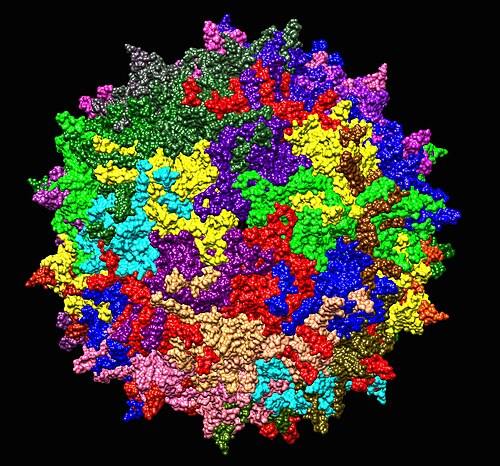
Onasemnogene abeparvovec takes a different approach and replaces the gene. An adeno-associated virus of serotype 9 carries DNA for the missing SMN protein and is given once into a vein, dosed by body weight. In a trial reported by J. R. Mendell and colleagues in 2017, 15 infants with SMA type 1 received a single infusion, 3 at a low dose and 12 at a high dose. At the data cutoff on 7 August 2017 all 15 were alive at 20 months without needing permanent ventilation, against 8 percent survival in a historical cohort. Of the 12 given the high dose, 11 sat without support, 11 fed by mouth and could speak, and 2 walked on their own. Four developed raised liver enzymes, which prednisolone damped.
The FDA approved the therapy as Zolgensma on 24 May 2019 for children under 2, the first gene therapy for SMA. Approval rested on 36 infants in two trials, with the main evidence from 21 in a trial still under way. The label carried a boxed warning that acute serious liver injury can occur, and liver function had to be checked before treatment and for at least three months after. In the United States a single treatment cost $2.125 million.
On 28 June, after approval, the manufacturer, AveXis, told the FDA that some data from animal testing in its application had been manipulated. In an August statement the FDA said the problem was confined to a small portion of product testing data used to develop the manufacturing process, did not change its view of the human trials, and that the therapy should stay on the market. The European Union granted conditional approval on 18 May 2020 for patients with SMA type 1 or with up to three copies of the SMN2 gene.
Keep exploring
 Read next · same disease or problem
Voretigene Neparvovec (Luxturna): First FDA-Approved In Vivo Gene Therapy for an Inherited Disease (2017)
Both deliver a working gene with an adeno-associated virus, into the eye for Luxturna and the bloodstream for onasemnogene. The Luxturna entry shows the first gene therapy given inside the body.
Read this moment
Read next · same disease or problem
Voretigene Neparvovec (Luxturna): First FDA-Approved In Vivo Gene Therapy for an Inherited Disease (2017)
Both deliver a working gene with an adeno-associated virus, into the eye for Luxturna and the bloodstream for onasemnogene. The Luxturna entry shows the first gene therapy given inside the body.
Read this moment
 Today on The Clinical Times
Love to Dream recalls portable baby sound machine over fire and burn risk
Love to Dream has recalled its portable Sleep Machine because its lithium-ion battery can overheat while charging with an incompatible charger, creating a risk of fire and burns.
Read today’s top stories
Today on The Clinical Times
Love to Dream recalls portable baby sound machine over fire and burn risk
Love to Dream has recalled its portable Sleep Machine because its lithium-ion battery can overheat while charging with an incompatible charger, creating a risk of fire and burns.
Read today’s top stories
All 526 moments in the history of medicine. This one is in chapter 7, Genes and pandemics
Connected moments
How this moment links to others in the history of medicine, and what you will find in each.
- Same disease or problem2016Nusinersen for spinal muscular atrophyNusinersen was the first drug for spinal muscular atrophy, and onasemnogene took a different approach by replacing the gene. The nusinersen entry shows treated infants reaching motor milestones.Read this moment
-
 Same disease or problem1990First Approved Human Gene Therapy (ADA-SCID, Ashanthi DeSilva)Gene therapy began with a partial result in 1990, and onasemnogene showed a single dose saving infants' lives. The ADA entry shows the first authorized gene transfer to treat a disease.Read this moment
- Same disease or problem2026Gene therapy for OTOF deafnessBoth are single-dose gene therapies that supply a missing working gene for an inherited disease of children. The OTOF entry shows a gene infused into the cochlea to treat deafness.Read this moment