Foundational Discovery
c. 100 BCE
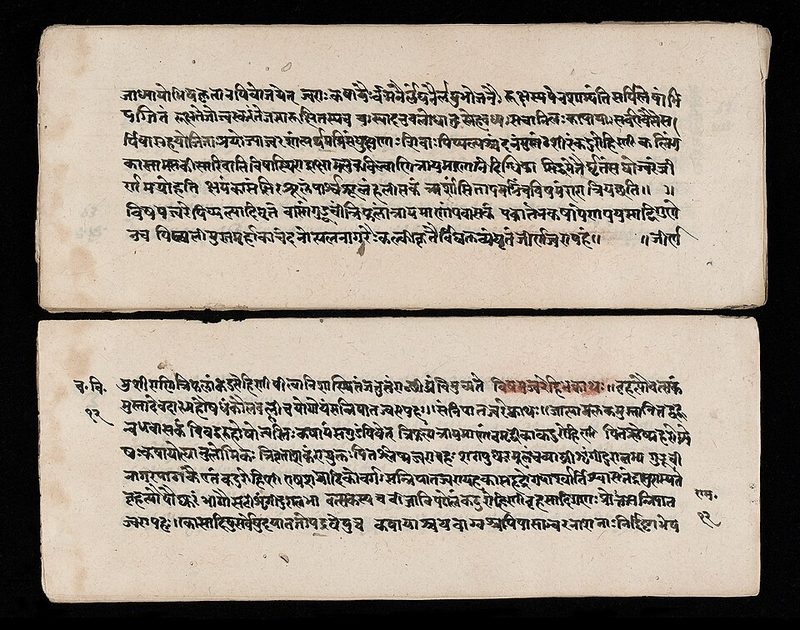
The Charaka Samhita
The oldest classical Sanskrit treatise of Ayurveda, compiled some time between about 100 BCE and 200 CE, set out Indian medical theory, diagnosis, diet, drugs and the conduct of physicians in eight sections and 120 chapters, including an initiation oath for medical students.
Key people
- Agniveśa
- Pupil of Ātreya credited with the original treatise
- Caraka
- Redactor who revised Agniveśa's treatise; dates uncertain
- Dṛḍhabala
- Final redactor who wrote the lost third, about the fifth century CE
Source
The Charaka Samhita tells its own history. It presents itself as the teaching of the sage Ātreya Punarvasu, written down by his pupil Agniveśa. A redactor named Caraka later revised Agniveśa's treatise. By the time of Dṛḍhabala, born in the town of Pañcanada, a third of it had been lost, and he wrote the missing parts himself: 17 chapters, usually taken to be the last 17 of the book on therapeutics, and the whole of the last two sections. The surviving text is generally regarded as his final redaction.
No firm date exists for any of these men. Jan Meulenbeld, in his History of Indian Medical Literature, placed the Caraka compilation between about 100 BCE and 200 CE and Dṛḍhabala around the fifth century CE. Older estimates ran much earlier: in 1969 I. A. Menon and H. F. Haberman gave about 1000 BC for Agniveśa and 300 to 200 BC for Caraka. Sylvain Lévi found a physician named Caraka at the court of King Kaniṣka in the Chinese Buddhist Tripiṭaka and took him for the author, while an Indian tradition identified Caraka with the grammarian Patañjali. The editors of the 1949 Jamnagar edition judged the Patañjali identification improbable.
The work has eight sections, covering general principles, causes of disease, specific determination, anatomy, prognosis from the senses, therapeutics, pharmaceutics and toxicology, and success in treatment. The 30th chapter of the first section lists all 120 chapters. Among the topics are the qualities of a good physician and nurse, quackery, which diseases are curable, dosage, diet and a healthy daily routine, along with remedies for poisoning and snake and insect bites.
A teacher initiated the medical student before the sacred fire, Brahmins and physicians. The student promised to stay celibate, speak the truth, eat no meat and carry no arms, and to work day and night for the relief of patients, never deserting or injuring one even to save his own life or living. He was not to reveal the customs of a patient's household or announce an approaching death where it would shock the patient. He was also to refuse treatment to enemies of the king, the wicked, the dying, and women who came without a husband or guardian.
According to the 1949 editors, Alberuni referred to an Arabic translation by Ali ibn Zain of Tabaristan, made for the princes of the Barmecide family, and another Arabic version was made from Persian on the order of Yahya ibn Khalid.
Keep exploring
 Read next · same disease or problem
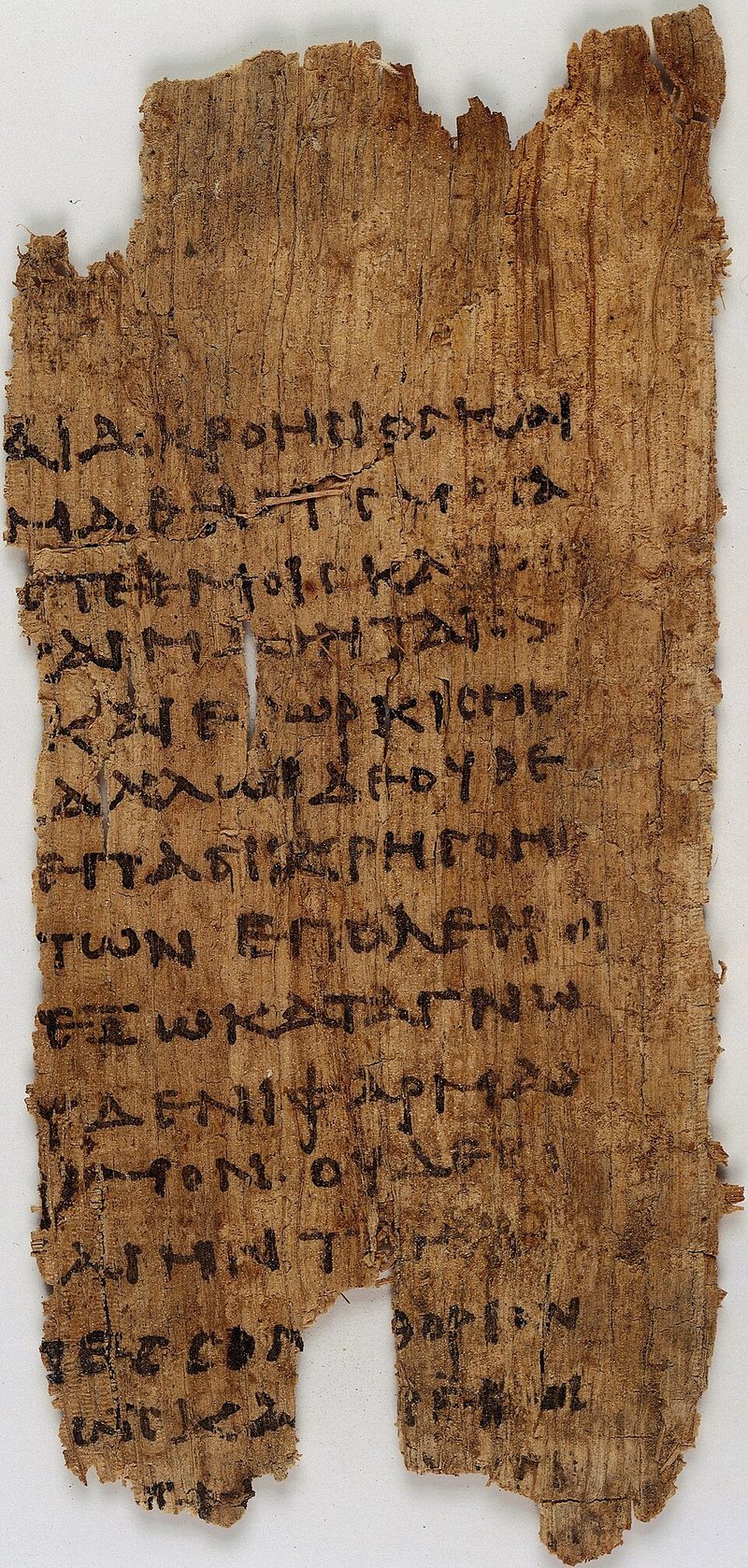
The Hippocratic Oath (c. 400 BCE)
Both bind new physicians by a vow, the Ayurvedic initiation before the sacred fire and the Greek Hippocratic oath. The oath shows the Greek terms: act for the sick, avoid harm, refuse deadly drugs and keep patients' secrets.
Read this moment
Read next · same disease or problem
The Hippocratic Oath (c. 400 BCE)
Both bind new physicians by a vow, the Ayurvedic initiation before the sacred fire and the Greek Hippocratic oath. The oath shows the Greek terms: act for the sick, avoid harm, refuse deadly drugs and keep patients' secrets.
Read this moment
 Today on The Clinical Times
Love to Dream recalls portable baby sound machine over fire and burn risk
Love to Dream has recalled its portable Sleep Machine because its lithium-ion battery can overheat while charging with an incompatible charger, creating a risk of fire and burns.
Read today’s top stories
Today on The Clinical Times
Love to Dream recalls portable baby sound machine over fire and burn risk
Love to Dream has recalled its portable Sleep Machine because its lithium-ion battery can overheat while charging with an incompatible charger, creating a risk of fire and burns.
Read today’s top stories
All 526 moments in the history of medicine. This one is in chapter 1, The ancient world
Connected moments
How this moment links to others in the history of medicine, and what you will find in each.
- Same disease or problem1948The Declaration of GenevaThe Charaka student vowed to work for patients and not reveal a household's customs, and the Declaration of Geneva asks much the same of modern doctors. It shows the pledge the World Medical Association adopted in 1948 and still uses.Read this moment
- Same disease or problem1858The Medical Act of 1858The Charaka Samhita discusses quackery, and Britain's Medical Act of 1858 tackled the same problem by law. It created a single register so that people could tell qualified practitioners from unqualified ones.Read this moment
-
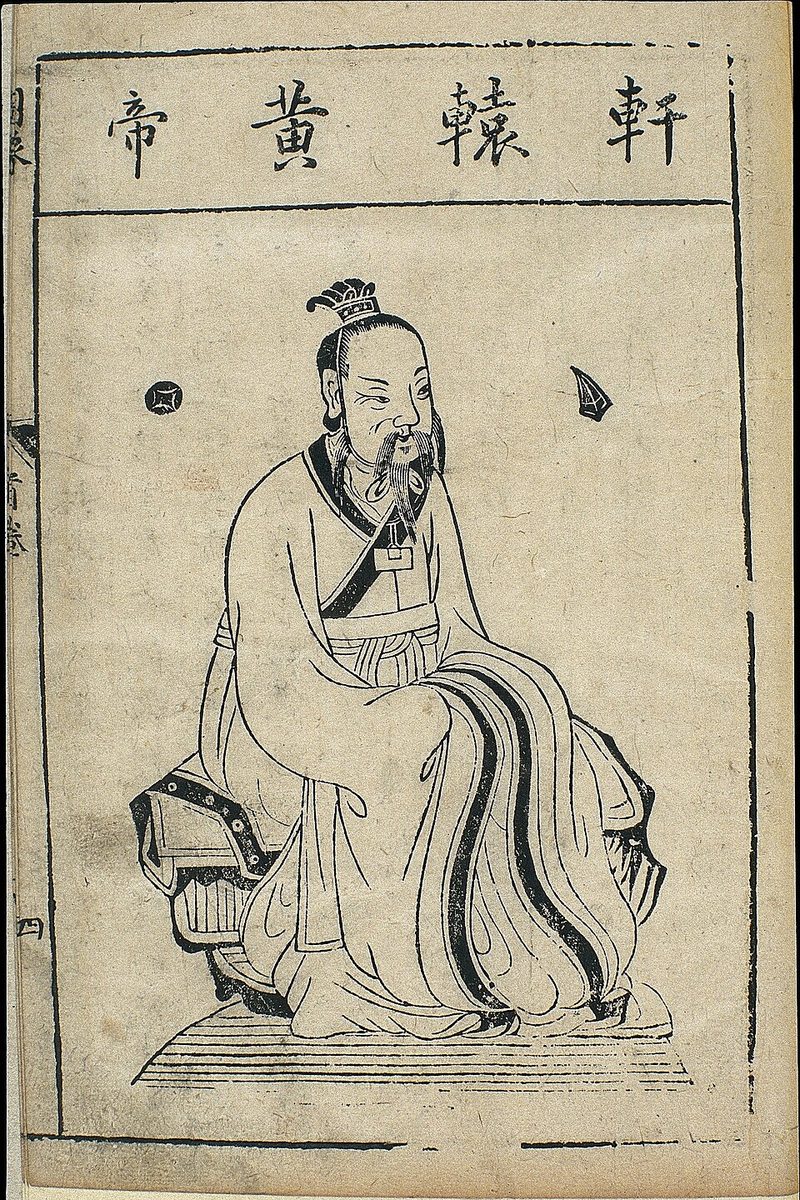 Same disease or problemc. 250 BCEThe Yellow Emperor's Inner ClassicBoth classics set out a whole medical system, covering the preservation of health as well as diagnosis and treatment. The Inner Classic shows the Chinese version, built on qi, yin and yang, the channels and acupuncture.Read this moment