Foundational Discovery
1976
Cimetidine and the H2 blockers
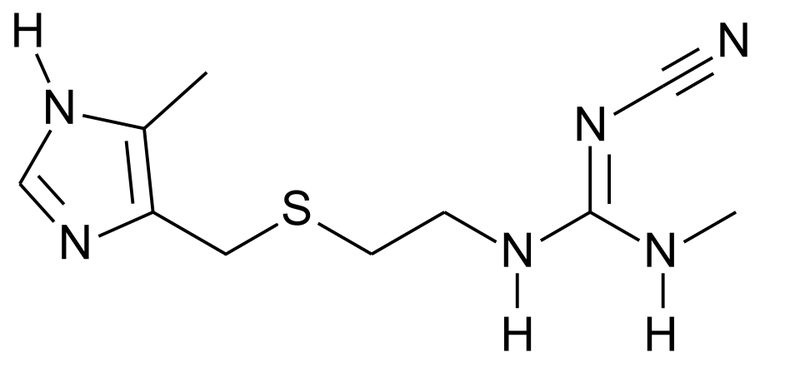
James Black's team at Smith Kline & French defined a second histamine receptor in the stomach and designed a drug to block it. Cimetidine, launched in November 1976, cut acid secretion enough to heal peptic ulcers without surgery.
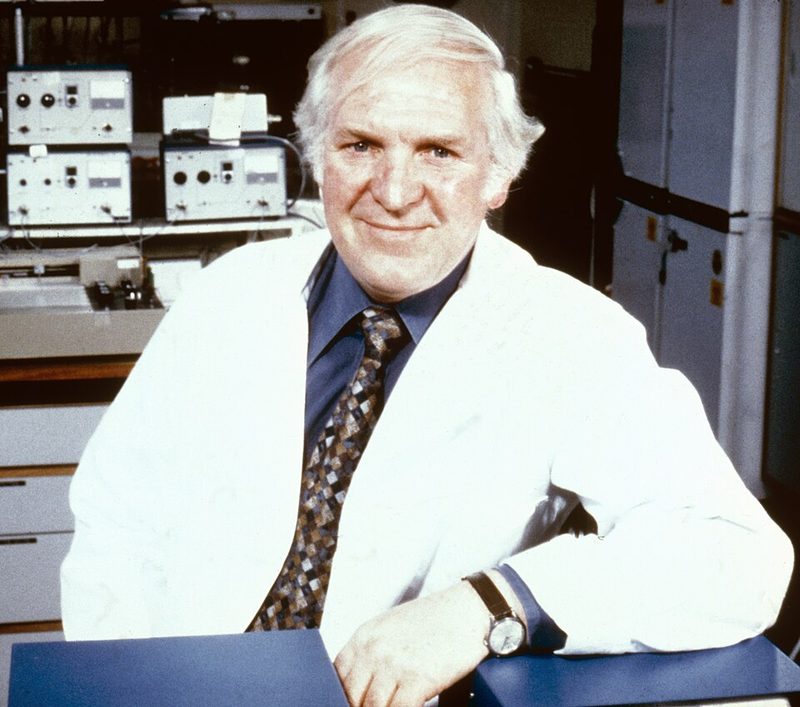
Key people
- James W. Black
- Pharmacologist who led the H2 receptor program at Smith Kline & French
- C. Robin Ganellin
- Medicinal chemist on the team that made burimamide, metiamide and cimetidine
- Graham J. Durant
- Chemist whose guanidine compound gave the first lead
Source
In the 1960s a peptic ulcer could mean years of pain and, at worst, fatal bleeding. Treatment was alkalis, rest and a bland diet, and when those failed, surgery to remove part of the stomach. Atropine-like drugs might have helped, but their side effects were unacceptable. One odd fact stood out to James Black: patients with duodenal ulcers secreted an exaggerated amount of acid in response to histamine, and yet the antihistamines of the day had no effect on acid at all.
Black had just developed propranolol by blocking one class of adrenaline receptor. In 1964 he moved to Smith Kline & French at Welwyn Garden City in England, convinced that histamine too acted through a second receptor that ordinary antihistamines missed. The chemists Graham Durant, Robin Ganellin and John Emmett and the pharmacologist Michael Parsons joined him to make variants of histamine and test them. By 1968 they had made some 200 compounds without finding a single antagonist. Parsons then made the acid assay more sensitive, and a guanidine compound Durant had made earlier turned out to be a weak partial antagonist.
Modifying that lead gave burimamide, reported in Nature in April 1972 as the first antagonist of the histamine H2 receptor, which the same paper defined. It was poorly absorbed by mouth. Metiamide, ten times more potent and active orally, healed ulcers within three weeks in trials begun in 1973, but some patients developed agranulocytosis, a dangerous fall in white blood cells. The team had prepared for this by making a related compound with a cyanoguanidine group in place of the suspect thiourea. That compound was cimetidine.
Smith Kline & French launched cimetidine as Tagamet in November 1976. Its factory at Cork, in Ireland, raised production from about 18 metric tons in 1976 to about 1,000 tons in 1982. Within ten years of launch its sales reached a billion dollars and it was the world's best-selling prescription drug. Black shared the 1988 Nobel Prize in Physiology or Medicine with Gertrude Elion and George Hitchings.
Keep exploring
 Read next · built on
Propranolol and the beta blockers (1964)
Black had just made propranolol by blocking one kind of adrenaline receptor, and he applied the same idea to histamine in the stomach. The propranolol entry shows his first receptor blocking drug, designed for angina.
Read this moment
Read next · built on
Propranolol and the beta blockers (1964)
Black had just made propranolol by blocking one kind of adrenaline receptor, and he applied the same idea to histamine in the stomach. The propranolol entry shows his first receptor blocking drug, designed for angina.
Read this moment
 Today on The Clinical Times
Love to Dream recalls portable baby sound machine over fire and burn risk
Love to Dream has recalled its portable Sleep Machine because its lithium-ion battery can overheat while charging with an incompatible charger, creating a risk of fire and burns.
Read today’s top stories
Today on The Clinical Times
Love to Dream recalls portable baby sound machine over fire and burn risk
Love to Dream has recalled its portable Sleep Machine because its lithium-ion battery can overheat while charging with an incompatible charger, creating a risk of fire and burns.
Read today’s top stories
All 526 moments in the history of medicine. This one is in chapter 6, Trials, scanners and rights
Connected moments
How this moment links to others in the history of medicine, and what you will find in each.
-
 Same disease or problem1984Marshall & Warren: Helicobacter pylori causes peptic ulcer diseaseCimetidine healed ulcers by cutting acid, and Marshall and Warren then showed most ulcers are caused by a bacterium. Their entry shows how peptic ulcer became a curable infection treated with antibiotics.Read this moment
-
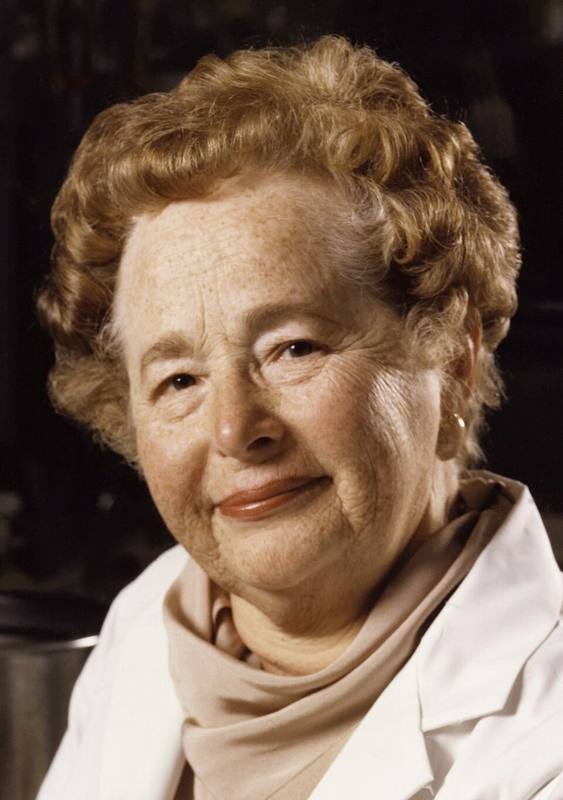 Same person1988Elion, Hitchings and rational drug designJames Black, who designed cimetidine around a receptor he predicted, shared the 1988 Nobel Prize with Gertrude Elion and George Hitchings. Their entry shows drugs built around how cells make nucleic acids, from azathioprine to acyclovir.Read this moment